Organic Pressed Sunflower oil
- Category: Sunflower Oil >>>
- Supplier: ALK Trading LLC
Share on (50036523601):
Product Overview
Description
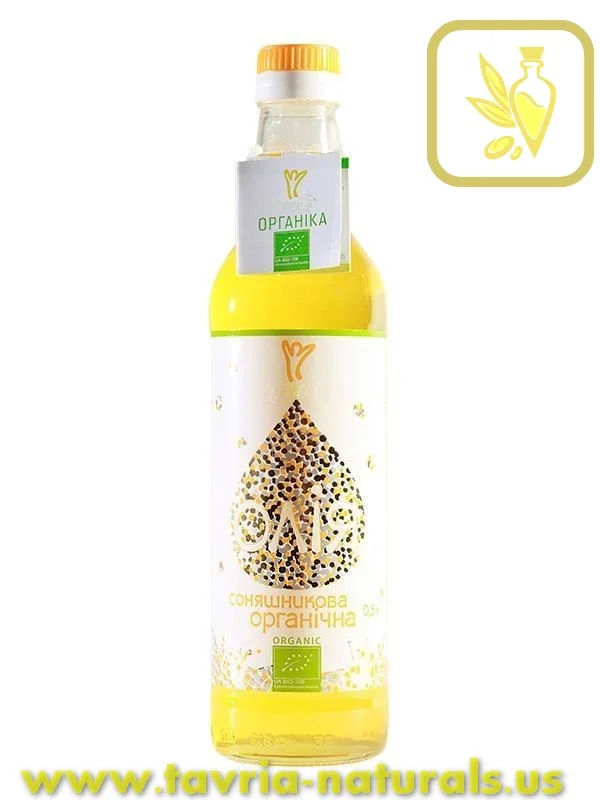
Our Euro-leaf mark confirms that the product you buy complies with the EU standards in organic agriculture and guarantees that the product ingredients are grown by organic farming, as well as the entire chain of the product growth and manufacturing is certified by duly accredited European agencies.
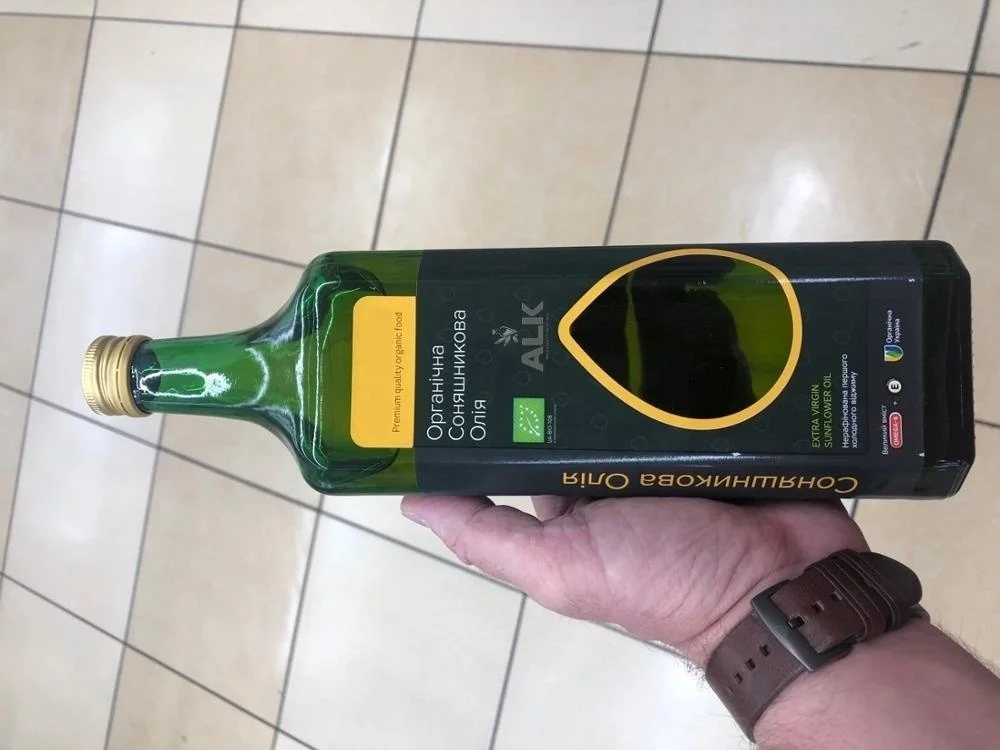
Our Organic Extra Virgin Cold-Pressed Sunflower Oil is made by single-stage pressing of organic sunflower seeds under the pressure of 25 atmospheres and subsequent oil purification by a membrane filter. Under pressure, oil is heated to 40-45 C degrees just due to friction. It is important that the cold-pressed oil is produced by non-roasted or not heat-treated sunflower seeds. This oil production process is called “extra virgin”. It allows saving all the vitamins, enzymes and other sunflower seed goodness. This sunflower oil contains poly- and monounsaturated omega fatty acids in the most bio-digestible form. It is very important that extra virgin cold-pressed oil is completely free of transfats – strong oxidants and carcinogens formed at heating. It is for these reasons that we recommend to use extra virgin cold-pressed sunflower oil for seasoning dishes and cooking sauces.
Our organic sunflower oil is available in
- Glass bottles
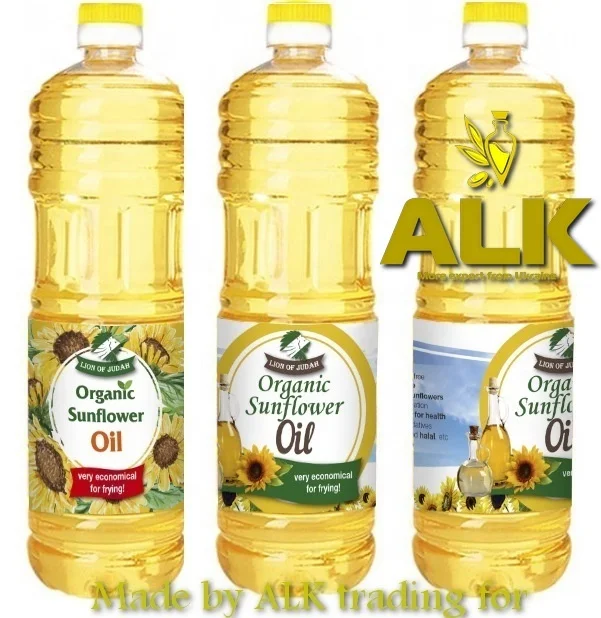
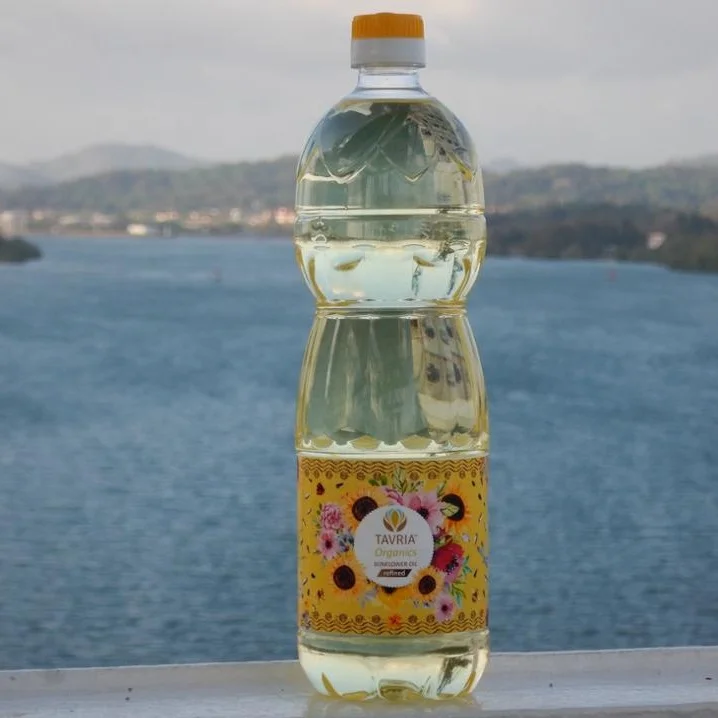
- PET
- Flexitanks
- 1000L IBS
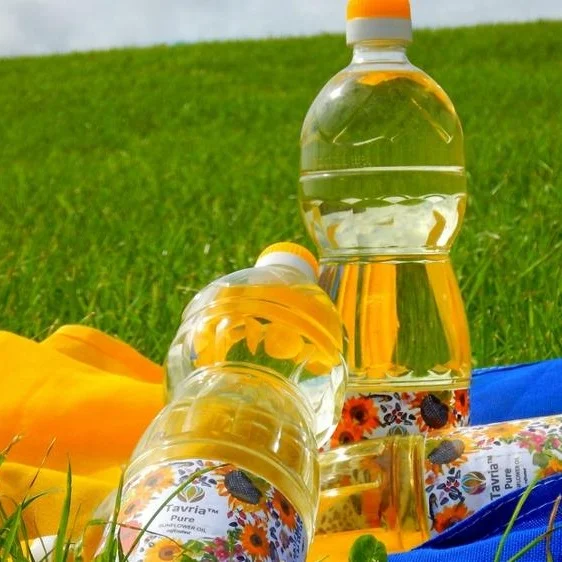
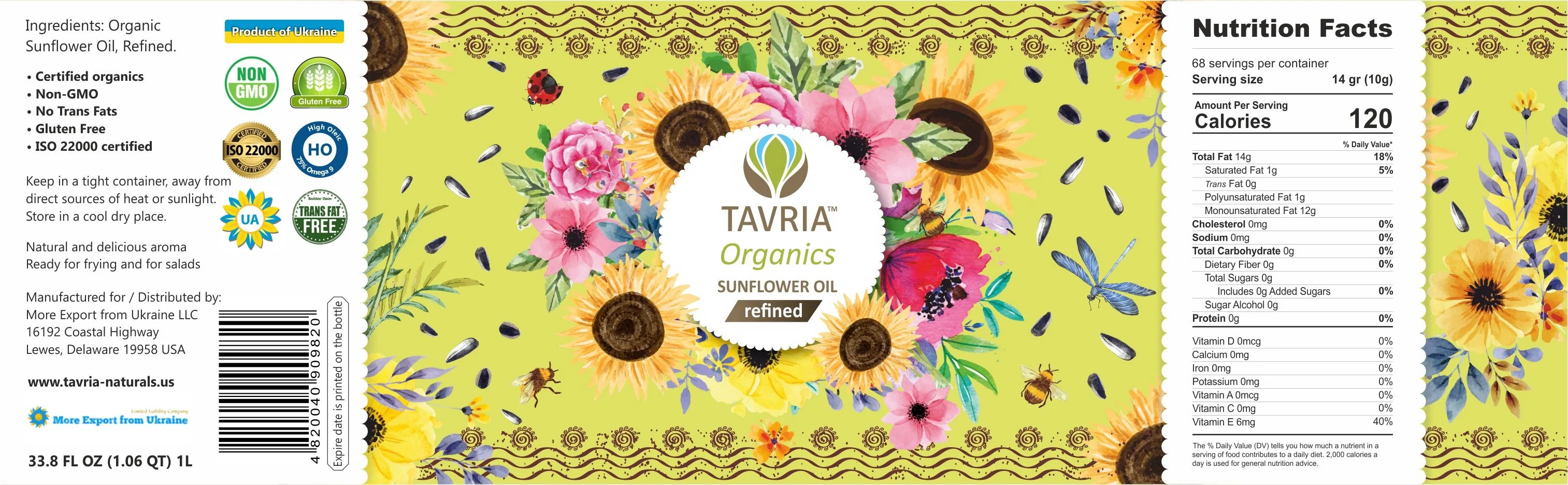
Tavria TM trademark is only for the US and Private Label any design
3 Important Facts About Extra Virgin Cold-Pressed Sunflower Oil:
-
Cold-pressed sunflower oil contains a huge amount of vitamin E that is an important natural antioxidant. 100 grams of oil contains more than 200% of daily adult need.
-
Sunflower oil contains five times more polyunsaturated fatty acids compared to olive oil. Polyunsaturated fatty acids are exceptionally important for the functioning of the heart and the entire cardiovascular system. They help to prevent atherosclerosis, improve blood circulation, and regulate cholesterol levels.
-
Sunflower oil has a positive effect on the cardiovascular system, reduces cholesterol levels, strengthens vascular walls, prevents atherosclerosis, thrombosis, heart attacks, and other heart and blood vessel diseases.
| Nutrition value | |
|---|---|
| Calories | 899 kcal |
| Proteins | 0 g |
| Fats | 99,85 g |
| Carbohydrates | 0 g |
| Dietary fibers | 0 g |
| Water | 0,15 g |
| Mono- and disaccharides | 0 g |
| Starch | 0 g |
| Ash | 0 g |
| Saturated fatty acids | 11 g |
| Unsaturated fatty acids | 89 g |
| Oleic acid | 25 g |
| Linoleic acid | 64 g |
| Vitamins | |
| Vitamin E | 75 mg |
| Information on product weight: | |
| Glass 250 ml = 210 g (646.8 kcal) | |
| Glass 200 ml = 170 g (523.6 kcal) | |
| Tablespoonful (heaped spoon, except liquid products) = 25 g (77 kcal) | |
| Teaspoonful (heaped spoon except liquid products) = 8 g (24.6 kcal) | |
Chemical composition of a product is characterized by calories, proteins, fats, carbohydrates, dietary fibers, and vitamins. For organic products, these parameters significantly depend on natural factors – air temperature and precipitation during vegetational season, dry or rainy season, geographic latitude and longitude of cultivation, botanical grain varieties, and soil type.
It is impossible to foresee all the factors, so these values are average and indicative only.
What is the goodness of cold-pressed extra virgin sunflower oil, and what is absent in refined ones?
Vitamins, enzymes, omega fatty acids...? These substances somewhat remain in the oil and are somewhat removed during refining. But what substance is never observed in crystal-clear, refined and deodorized oil?
The right answer is that we won’t see any sediment!
So, fine whitish substances floating in oil and forming a barely visible “net” – suspension of fine particles – are called Phospholipids. These tiny particles can settle out into whitish sediment at the bottom of an oil bottle.
As an example, how could we visually observe phospholipids in oil?
Most olive oil is made by “extra virgin” process – virgin cold pressing, i.e. without refining and deodorizing, that allows keeping phospholipids. You've probably noticed that olive oil becomes white when exposed to the cold. Phospholipids in oil become visible with decreasing temperature. Conversely, they become almost colorless at increased oil temperatures. If we cool down a bottle of virgin cold-pressed sunflower oil, we'll observe the same effect – oil will become white as it contains phospholipids.
This is due to the fact that phospholipids are a part of cell membranes that show themselves as solids with decreasing temperature and transform into a liquid-crystal state with increasing one.
What are Phospholipids from the consumers' viewpoint?
Phospholipids are the most healthy, tasty and flavored oil component that adds flavor and pleasant scent to sunflower oil. Their absence, accordingly, makes oil completely tasteless and odorless. Therefore, in 99 cases of 100, one is not able to determine by taste whether refined and deodorized oil was made of pumpkin, sunflower or rapeseeds.
An interesting question is: how do phospholipids affect human health?
Probing deeper into biochemistry, we can see that phospholipids are a part of all cell membranes. Plasma exchanges phospholipids with erythrocytes. This determines their main property – the ability to form cell membranes (lipid bilayer).
Liver contains the largest number of phospholipids in cell membranes. Its cell membranes consist of 65% of phospholipids. Brain and heart follow the liver by the phospholipids percentage in cell membranes.
Phospholipids form the basis of nerve cell membranes and are the main component of the nerve trunk sheath structure. Nerve cell responses deteriorate in their deficiency and may recover only by adding a sufficient amount of phospholipids to food.
Being more hydrophilic than cholesterol (i.e. featuring more intense interaction with water), phospholipids act as cholesterol “solvent”. The cholesterol/phospholipid ratio in blood plasma predetermines the degree of cholesterol solubility in human blood vessels, while the cholesterol/phospholipid ratio in bile predetermines susceptibility to gallstone formation.
By the way, here is a simple test. If the same sunflower oil is tasty for your friend and tastes bitter for you, you should pay attention to your liver and gall bladder and undergo appropriate medical diagnosis.
Phospholipids in oil when cooking:
It should also be noted that phospholipids presence does not allow using oil for frying at high temperatures, as it is the suspension of barely visible whitish particles – phospholipids – that starts sticking. In other words, it is not prohibited to fry using “extra virgin” – virgin cold-pressed – oil, but you'll need more oil and should refrain from keeping it at critically high temperatures for a long time. Professional chefs recommend frying with a mixture of 40% of unrefined oil and 60% of refined one. It can be said that unrefined oil is rather intended for making salads and cooking at low temperatures.
From the manufacturers' viewpoint. Why is the majority of oils produced refined and deodorized, i.e. why should whitish sediment – phospholipids – be absent in oil?
Phospholipids are a litmus test of seeds and oil quality. In case of large-scale mass production, it is impossible to ensure consistent quality of all sunflower lots by such organoleptic characteristics as taste and smell and such physical characteristics as humidity, impurity content, acidity, etc. If oil produced of a single undergrad sunflower lot is mixed with the total flow, phospholipids start oxidizing the entire amount of oil produced, which significantly reduces the oil quality and its shelf life – it may become unfit much before it is planned "sell before" date expires. Besides, tasting qualities of such oil might raise questions. Therefore it makes sense for a mass manufacturer to “sterilize” oil by making it refined and deodorized, but at that time it becomes completely tasteless and virtually useless for human health.
Our sign "Eurolist" confirms that:
— the product meets EU standards of organic agriculture,
— all ingredients of the product are obtained as a result of organic production.
— does not contain GMOs
ALK Trading is one of the leading Ukranian export company with wholesale experience in the agricultural market. We export all kind of Ukrainian natural products of best quality worldwide.
Our office is located in Odessa - the basic Ukrainian port and commercial trade area. Our export prices are always optimized for the latest market trends, that is why it helps us to build very effective relationships and provide a cost-effective service.
Try with us! We provide our clients with full export service for grains and eligible oil products from Ukraine.
Be ready for new 2019 harvest with us! By listening carefully to you as an entrepreneur, we know which requirements products must meet. Because of the large network that we have established and our in-house expertise, we go a long way towards meeting your needs. That is why we refer to ourselves as a platform for export solutions oils. Our packed products are available under individual private label design.
We Recommend


Premium Quality Sunflower Oil
US $0.50-$0.70


Organic High Oleic Sunflower Oil
US $200.00-$260.00

Sunflower Oil
US $740.00-$800.00
New Arrivals
New products from manufacturers at wholesale prices