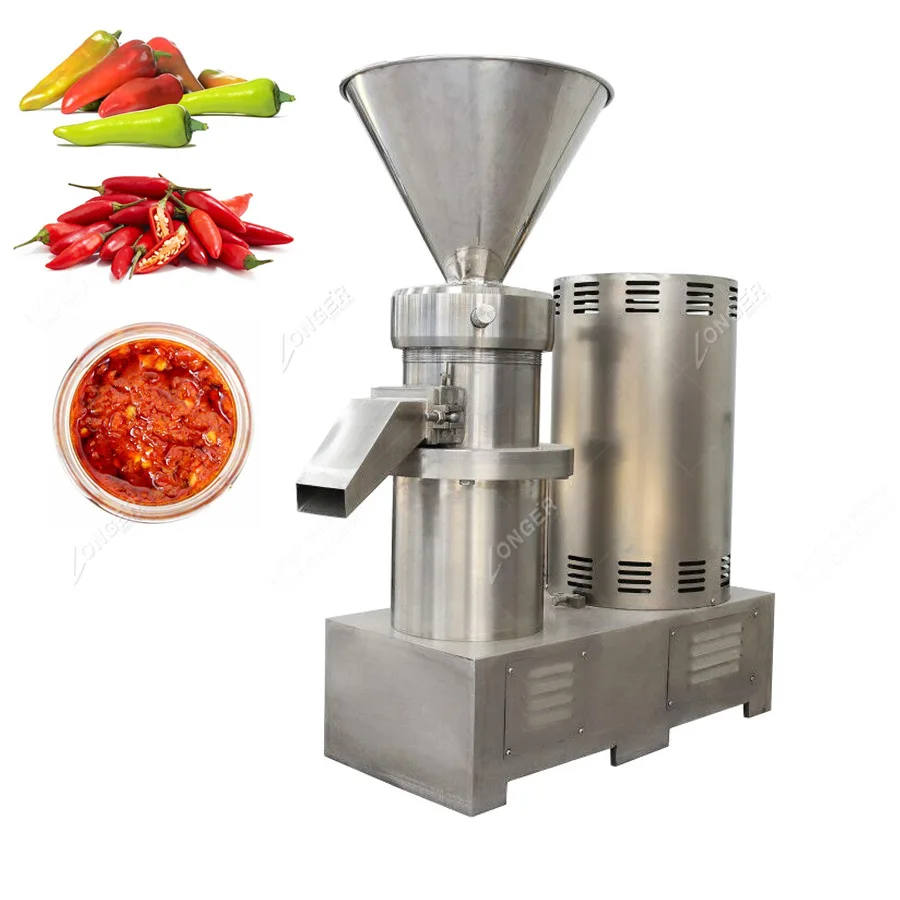
Hot Selling Small Red Pepper Paste Milling Chilli Grinding Tomato Sauce Making Machine
- Category: Spice & Sauce Machines >>>
- Supplier: Zhengzhou Longer Machinery Co. Ltd.
Share on (60646314411):
Product Overview
Description
Product Description
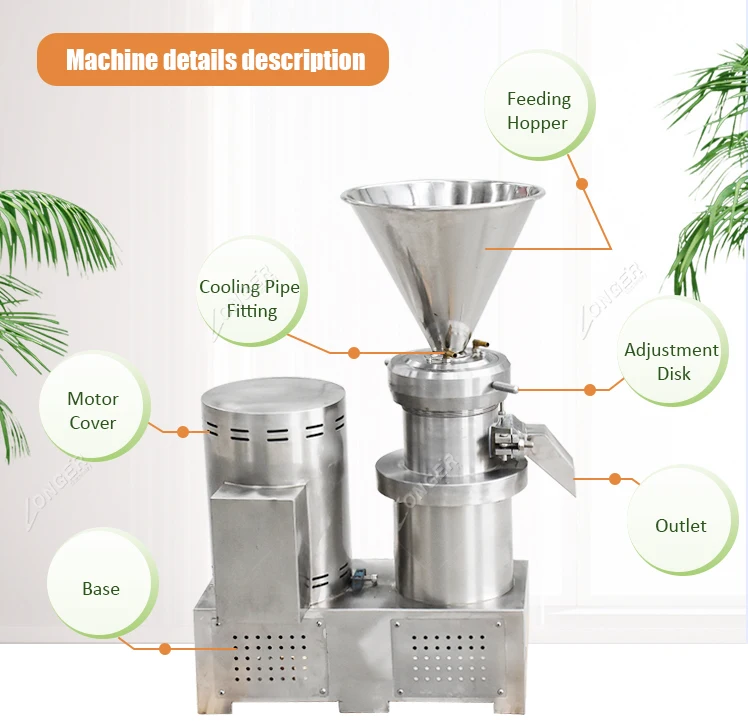
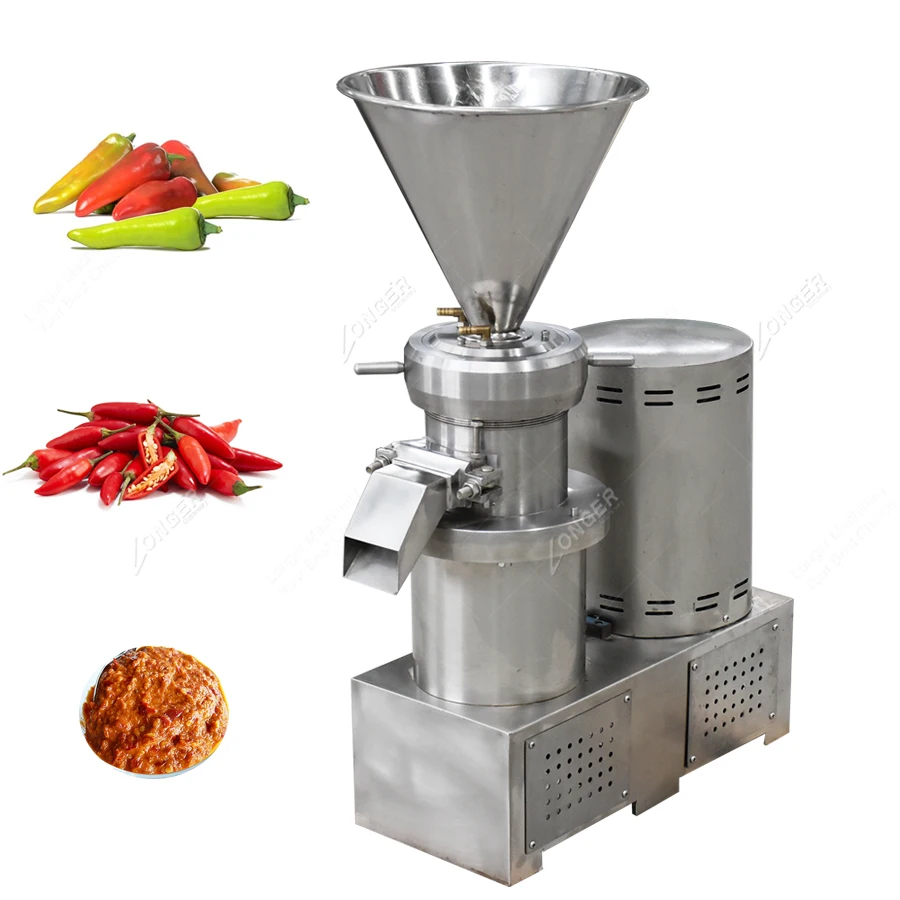
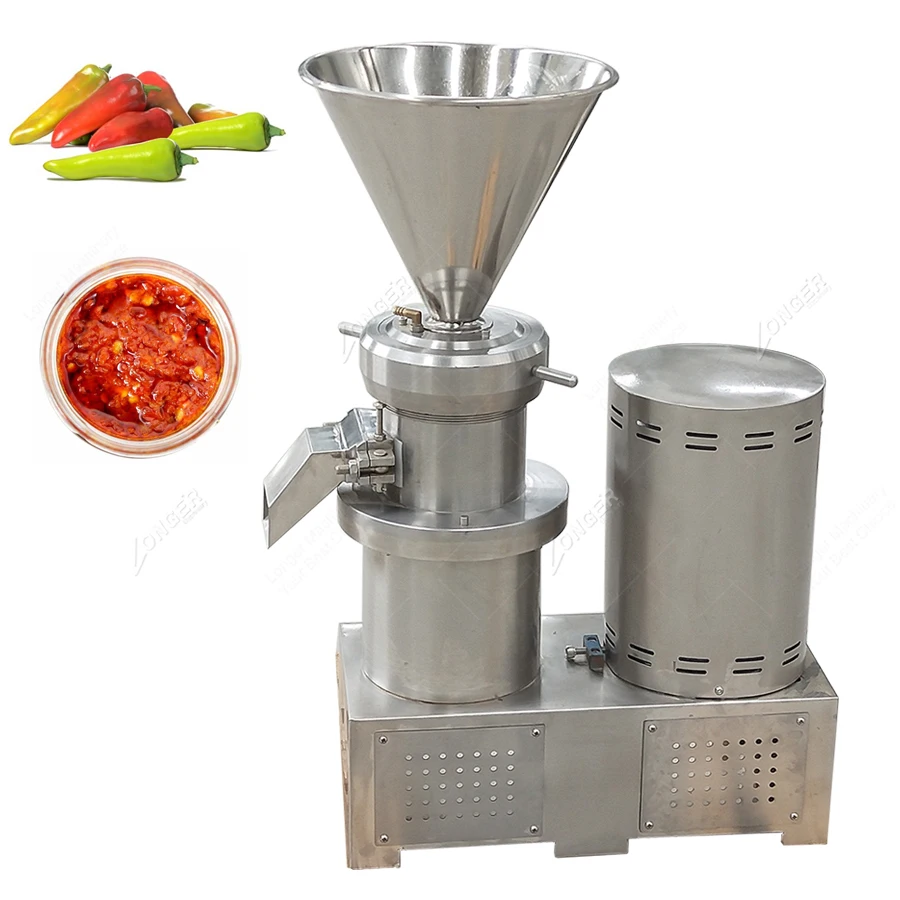
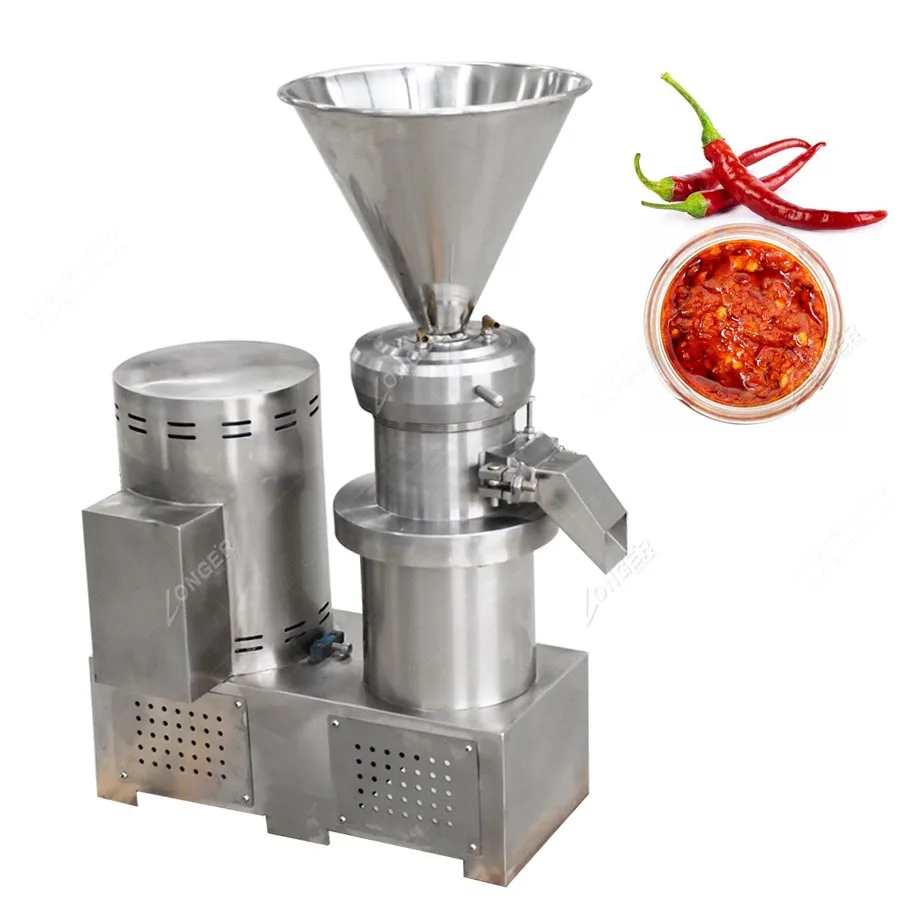
Introduction of Chili Sauce Making Machine: The chilli sauce making machine is mainly used to grind the washed and stalk removed, chopped chilli into chilli paste and then filling and packing into bottles.
Pepper Sauce Making Machine:
The chilli sauce making machine can process peanut, sesame, ginger, garlic, fresh chili, cacao beans, kinds of fruit, like apply, tomato to make them into butter/paste.
Coarse Grinding Machine: Using steel grinder to make the first grinding.
Fine Grinding Machine: Using colloid grinder to make the second grinding, the fineness of grinding is controlled below 7μm, temperature of grinding is controlled below 68℃.
Pepper Sauce Making Machine:
The chilli sauce making machine can process peanut, sesame, ginger, garlic, fresh chili, cacao beans, kinds of fruit, like apply, tomato to make them into butter/paste.
Coarse Grinding Machine: Using steel grinder to make the first grinding.
Fine Grinding Machine: Using colloid grinder to make the second grinding, the fineness of grinding is controlled below 7μm, temperature of grinding is controlled below 68℃.


Size Information
Model | LG-JMS110 |
Capacity | 300-1200KG/H |
Power(kw) | 7.5 |
Dimension(mm) | 750*450*1000 |
Feed port diameter | 50mm |
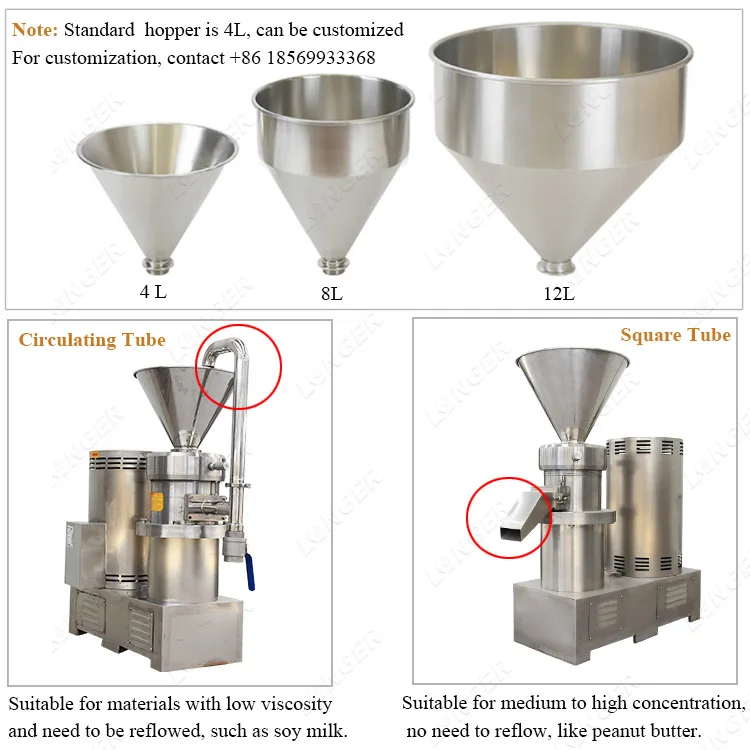
Feeding Hopper volume | 8L |
Detailed Images

Related Products

FAQ
Q1. Can I change the material of the stator and rotor?
A1: The material texture is soft. If the acid content is high, the 304 material can be used. It is generally not recommended to
change the rotor material.
Q2. How is the discharge temperature?
A2: When grinding nuts, beans, long-term work monomer colloid milling temperature is 70-80 degrees Celsius, double colloid milling
temperature is 100 degrees Celsius.
Q3. How to clean the machine?
A3: Clean the machine with water, dry it with a high-pressure air gun, keep it dry in a dry place, check the machine regularly and
apply oil on the machine.
Q4. How to grind repeatedly?
A4: The colloid mill grinding nozzle can be changed to the circulating return pipe. The circulating return pipe is provided with a
three-way valve. It can be discharged or cycled as needed. All models can be changed. The 80 and 110 return pipes are 25mm in
diameter, 130/. 180 return pipe diameter 32mm.
Q5. How often to replace the fixed rotor?
A5: The nut material is generally grind 100-200T, the rotor must be replaced, for other materials, according to the hardness of
the material and equipment using frequency.
Q6. How to use the cooling nozzles?
A6: The machine should be used cooling nozzles first, then start to grind material.
A1: The material texture is soft. If the acid content is high, the 304 material can be used. It is generally not recommended to
change the rotor material.
Q2. How is the discharge temperature?
A2: When grinding nuts, beans, long-term work monomer colloid milling temperature is 70-80 degrees Celsius, double colloid milling
temperature is 100 degrees Celsius.
Q3. How to clean the machine?
A3: Clean the machine with water, dry it with a high-pressure air gun, keep it dry in a dry place, check the machine regularly and
apply oil on the machine.
Q4. How to grind repeatedly?
A4: The colloid mill grinding nozzle can be changed to the circulating return pipe. The circulating return pipe is provided with a
three-way valve. It can be discharged or cycled as needed. All models can be changed. The 80 and 110 return pipes are 25mm in
diameter, 130/. 180 return pipe diameter 32mm.
Q5. How often to replace the fixed rotor?
A5: The nut material is generally grind 100-200T, the rotor must be replaced, for other materials, according to the hardness of
the material and equipment using frequency.
Q6. How to use the cooling nozzles?
A6: The machine should be used cooling nozzles first, then start to grind material.
Company Introduction

Customer Photos
We Recommend


New Arrivals
New products from manufacturers at wholesale prices