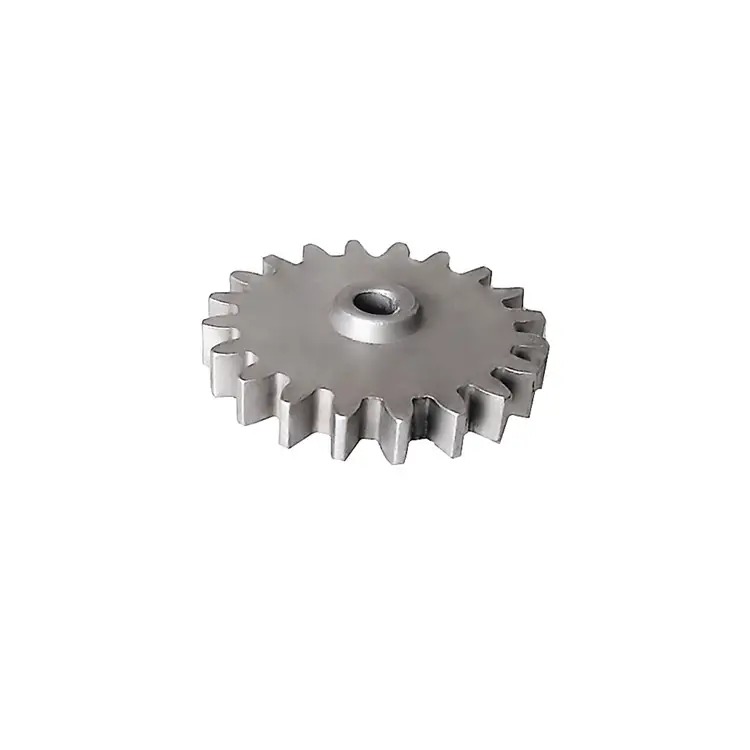
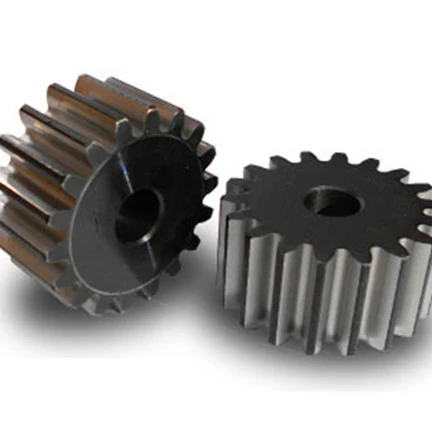
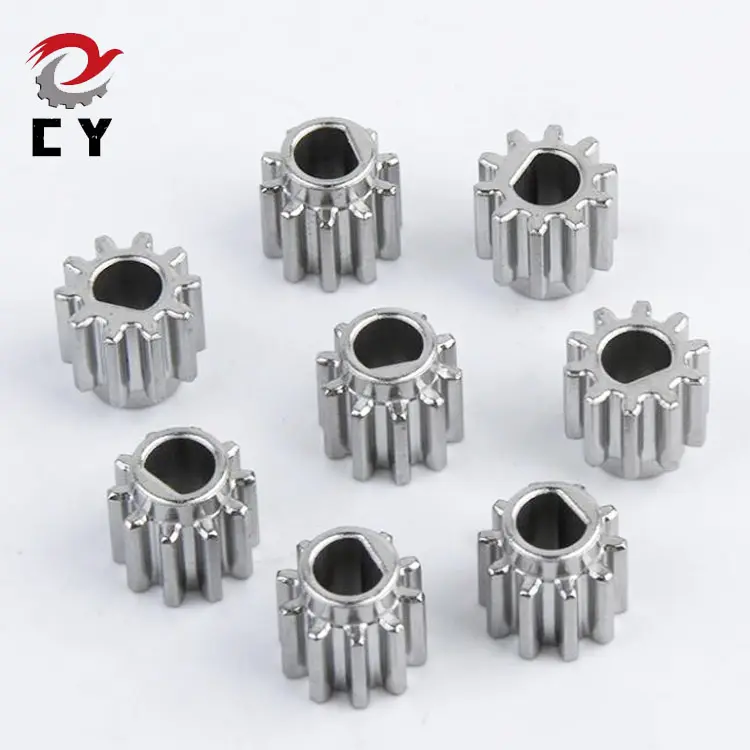
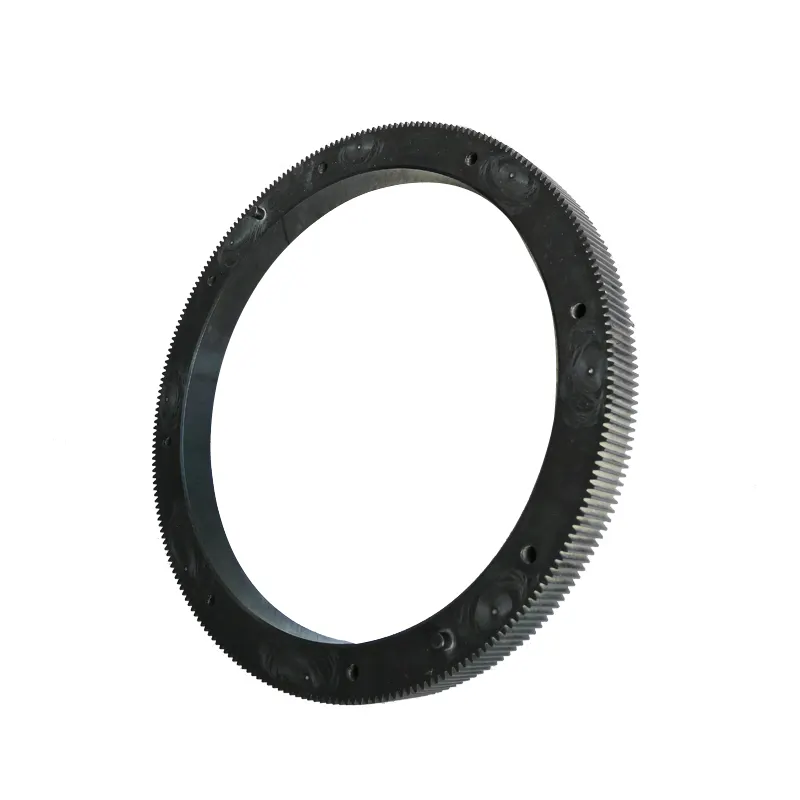
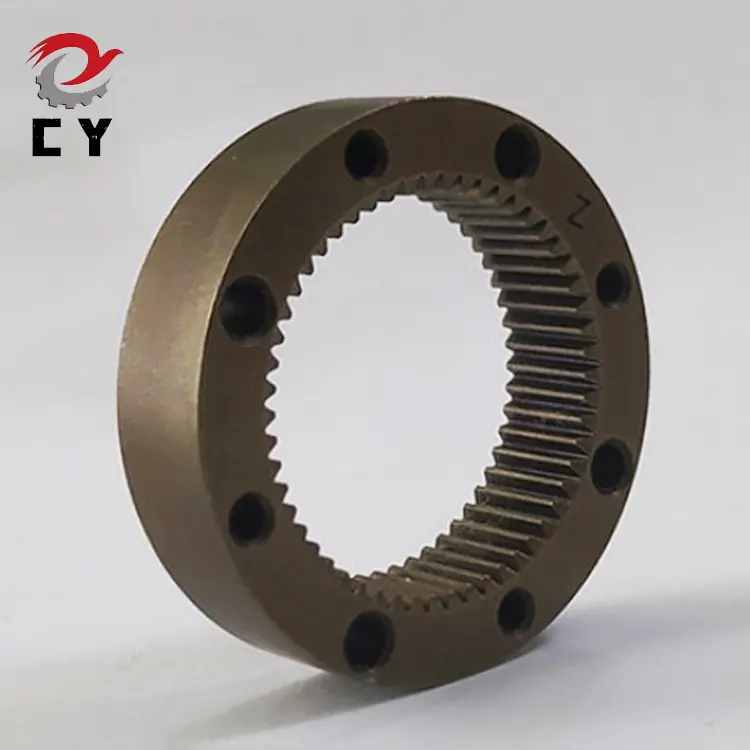
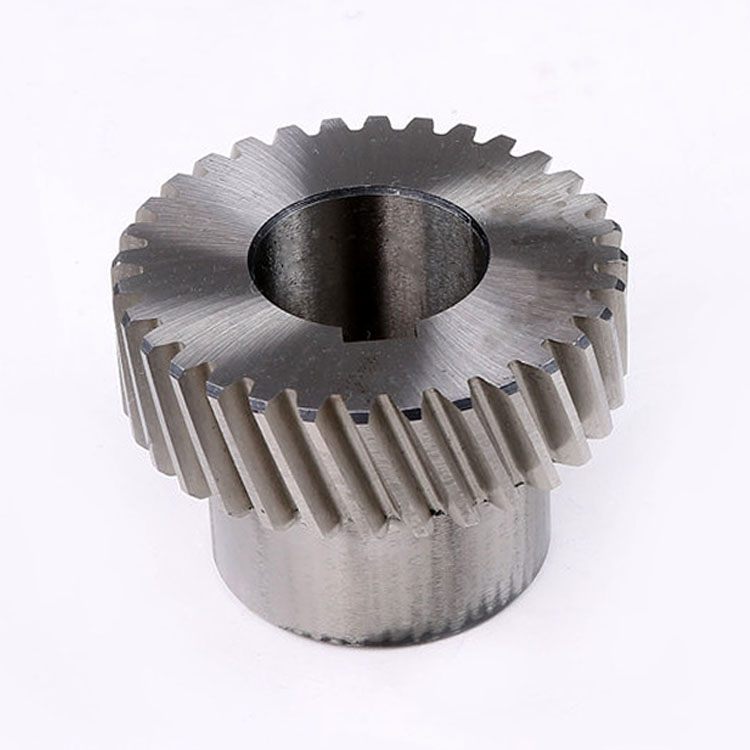
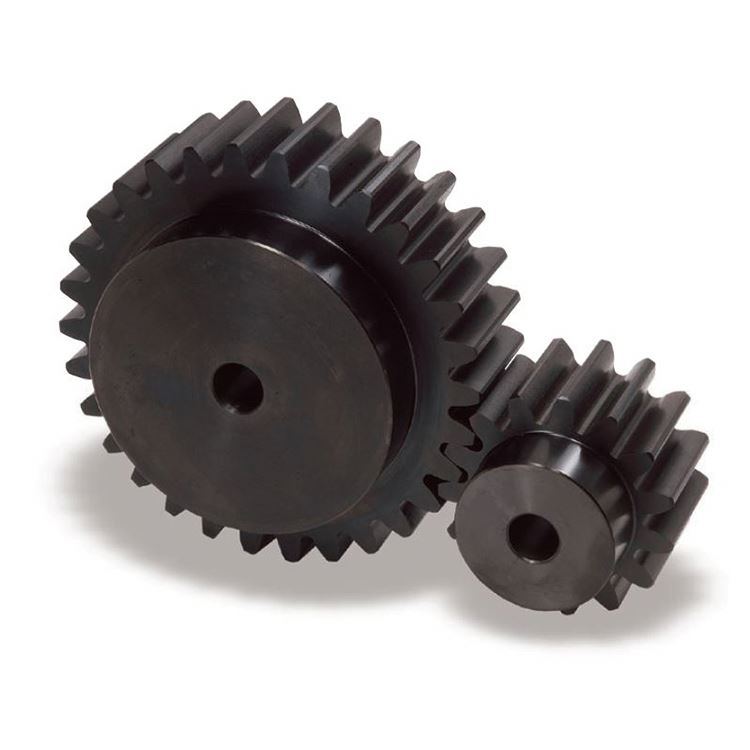
Spur gears are the most easily visualized common gears that transmit motion between two parallel shafts. Because of their shape, they are classified as a type of cylindrical gears. Since the tooth surfaces of the gears are parallel to the axes of the mounted shafts, there is no thrust force generated in the axial direction. Also, because of the ease of production, these gears can be made to a high degree of precision. On the other hand, spur gears have a disadvantage in that they easily make noise. Generally speaking, when two spur gears are in mesh, the gear with more teeth is called the “gear” and the one with the smaller number of teeth is called the “pinion”.
The unit to indicate the sizes of spur gears is commonly stated, as specified by ISO, to be “module”. In recent years, it is usual to set the pressure angle to 20 degrees. In commercial machinery, it is most common to use a portion of an involute curve as the tooth profile.
Even though not limited to spur gears, profile shifted gears are used when it is necessary to adjust the center distance slightly or to strengthen the gear teeth. They are produced by adjusting the distance between the gear cutting tool called the hobbing tool and the gear in the production stage. When the shift is positive, the bending strength of the gear increases, while a negative shift slightly reduces the center distance. The backlash is the play between the teeth when two gears are meshed and is needed for the smooth rotation of gears. When the backlash is too large, it leads to increased vibration and noise while the backlash that is too small leads to tooth failure due to the lack of lubrication.
All NBZX spur gears have an involute tooth shape. In other words, they are involute gears using part of the involute curve as their tooth forms. Looking generally, the involute shape is the most wide-spread gear tooth form due to, among other reasons, the ability to absorb small center distance errors, easily made production tools simplify manufacturing, thick roots of the teeth make it strong, etc. Tooth shape is often described as a specification in drawing of a spur gear as indicated by the height of teeth. In addition to standard full depth teeth, extended addendum and stub tooth profiles exist.
Product Description
Product Name:
gears
Material:
S45C SCM415 SUS303
Module:
0.5 - 6
Hardening:
Induction hardening,Overall Carburizing,NONE
Tooth finish:
Ground teeth,CUT,Sintered,
Grade:
JIS N5-12
Brand:
NBZX
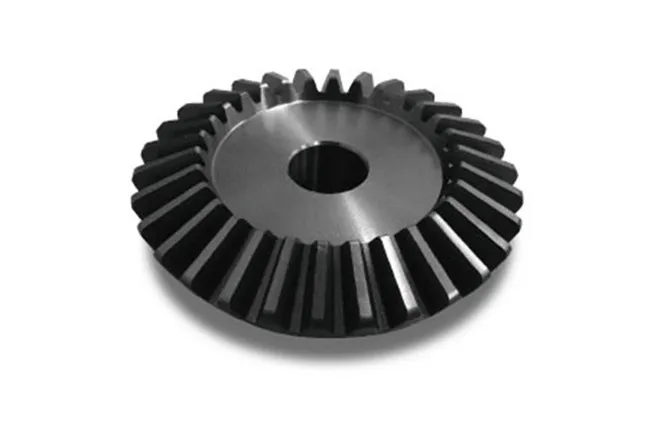
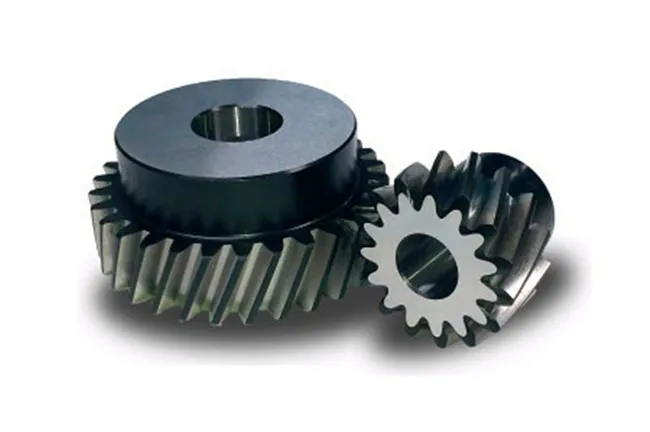
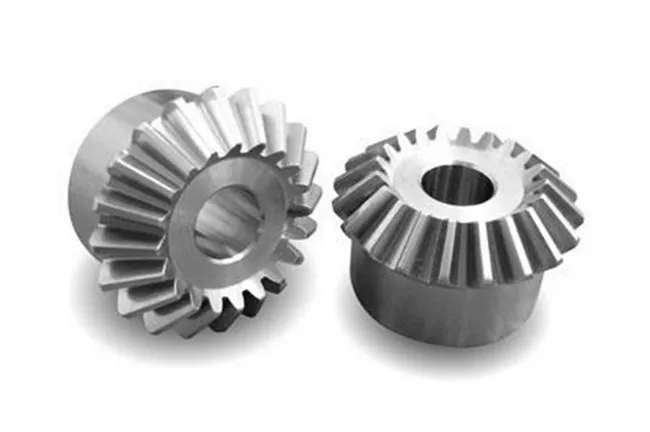
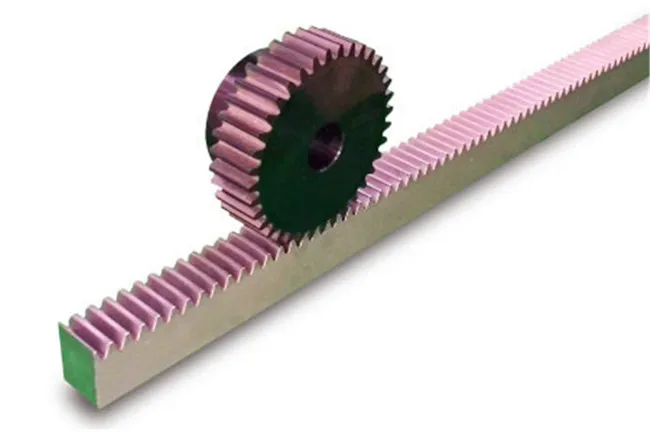
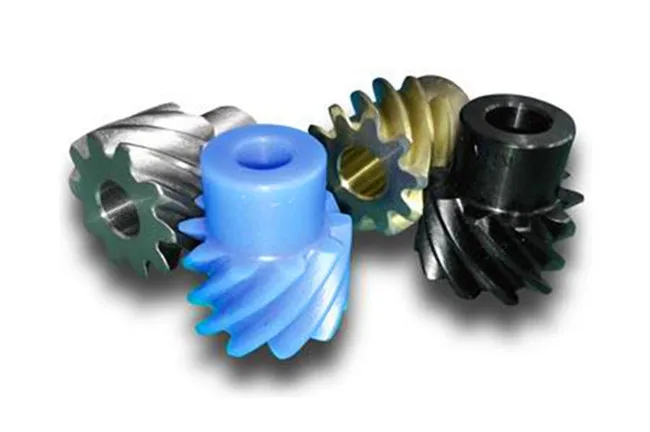
There are many types of gears such as spur gears, helical gears, bevel gears, worm gears, gear rack, etc. These can be broadly classified by looking at the positions of axes such as parallel shafts, intersecting shafts and non-intersecting shafts.
It is necessary to accurately understand the differences among gear types to accomplish necessary force transmission in mechanical designs. Even after choosing the general type, it is important to consider factors such as: dimensions (module, number of teeth, helix angle, face width, etc.), standard of precision grade (ISO, AGMA, DIN), need for teeth grinding and/or heat treating, allowable torque and efficiency, etc.
Besides this page, we present more thorough gear technical information under Gear Knowledge (separate PDF page). In addition to the list below, each section such as worm gear, rack and pinion, bevel gear, etc. has its own additional explanation regarding the respective gear type. If it is difficult to view PDF, please consult these sections.
It is best to start with the general knowledge of the types of gears as shown below. But in addition to these, there are other types such as face gear, herringbone gear (double helical gear), crown gear, hypoid gear, etc.
Optimized gear manufacturing
The purpose of production activity is to create added value. This also applies to gear manufacturing, and added value creation is conducted through production control for the purpose of achieving QCD (quality, cost, volume and deadline), including everything from the procurement of raw materials such as round bars for cylindrical gears and squared timber for racks to the packaging and shipping of the final products, namely gears.
The production process required for gear manufacturing covers a lot of ground, but general examples which can be given include cutting of materials with cutting machines, processing of materials with lathes, cutting of cylindrical gear teeth with hobbing machines, cutting of rack teeth with rack panels, cutting of internal gear teeth with gear shapers, deburring, and blackening, etc. In gear manufacturing processes other than machining mentioned above are also used such as injection molding, sintering, rolling, and casting. Furthermore, polishing, tempering, surface processing, teeth shape measurement, and examination with 3D measurement devices are also components of production activity.
The same as other industries, whether they are made to stock or built to order, optimization of manufacturing by making improvements (Kaizen) is essential in gear manufacturing.