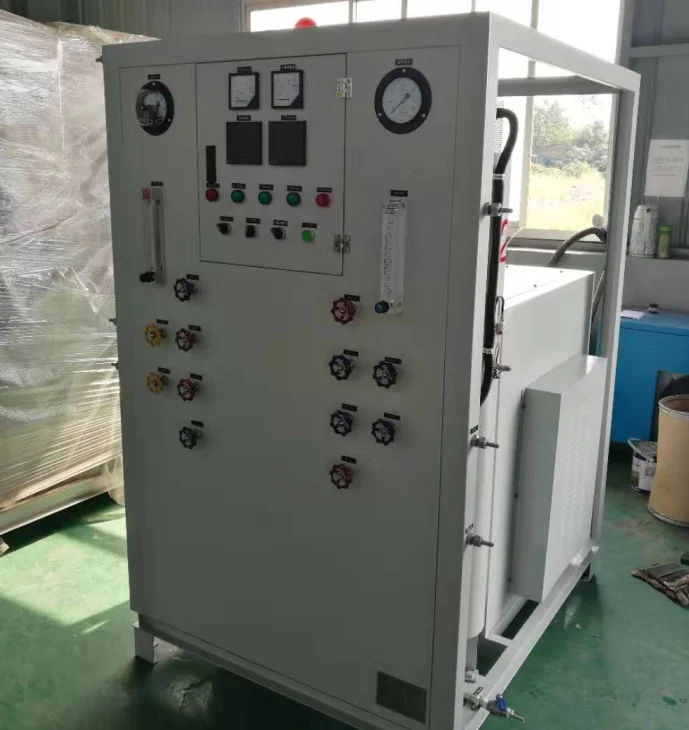
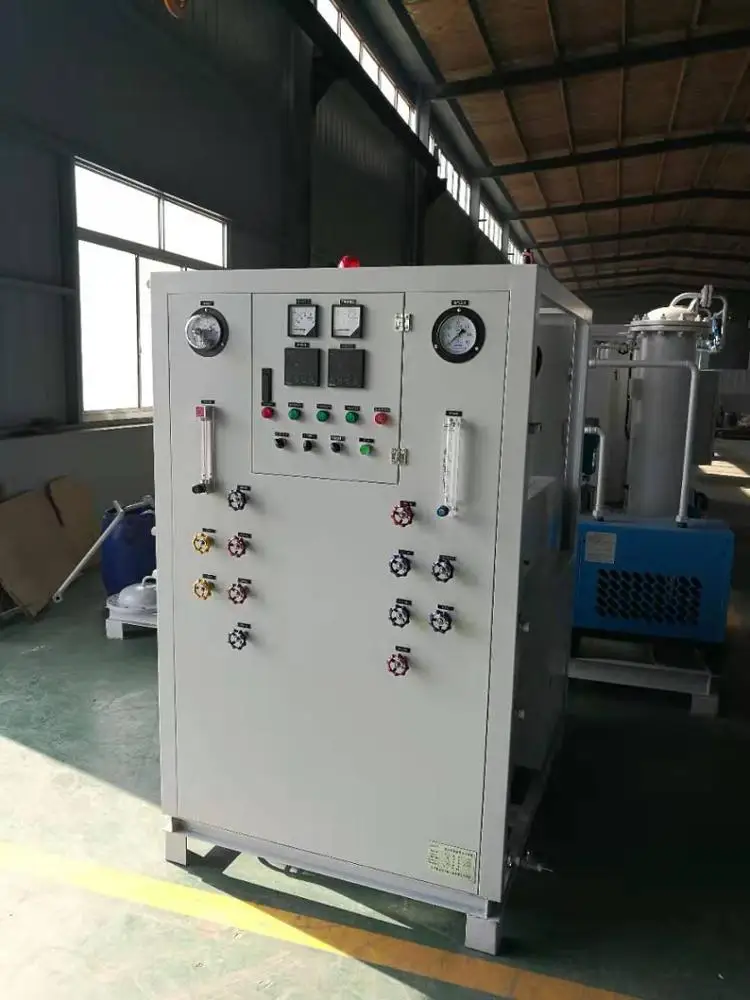
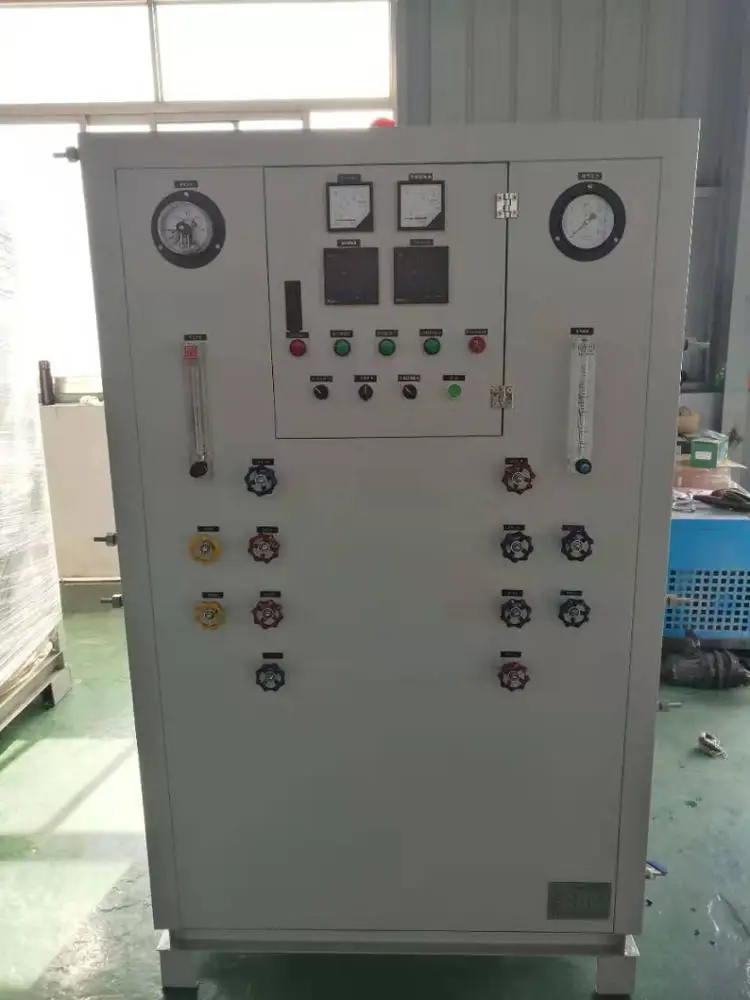
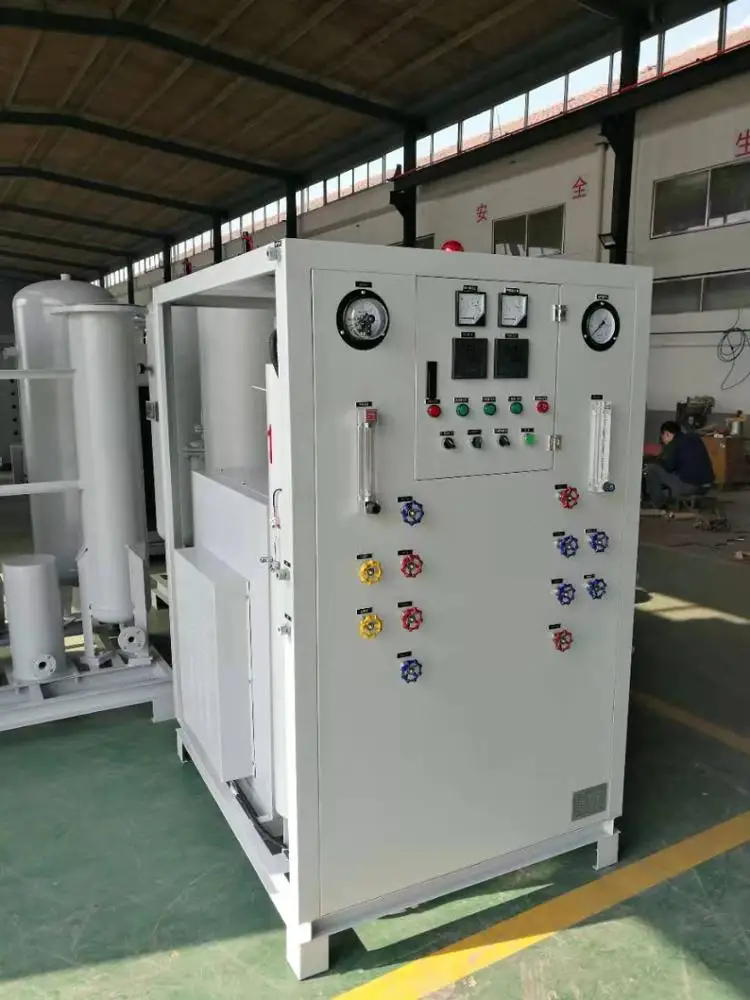
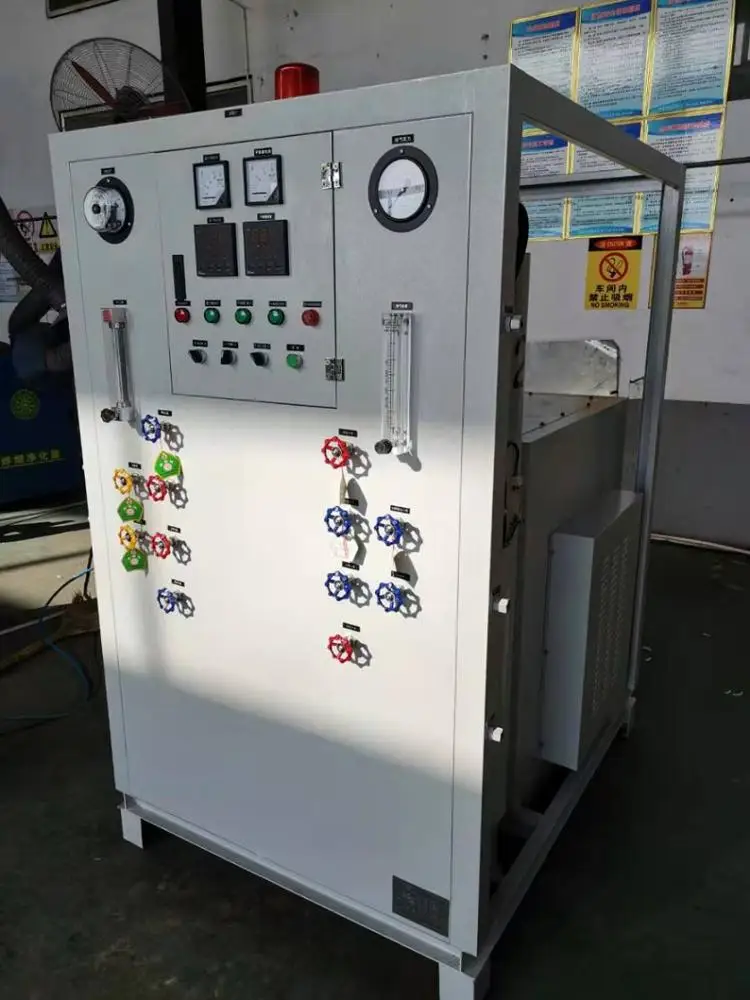
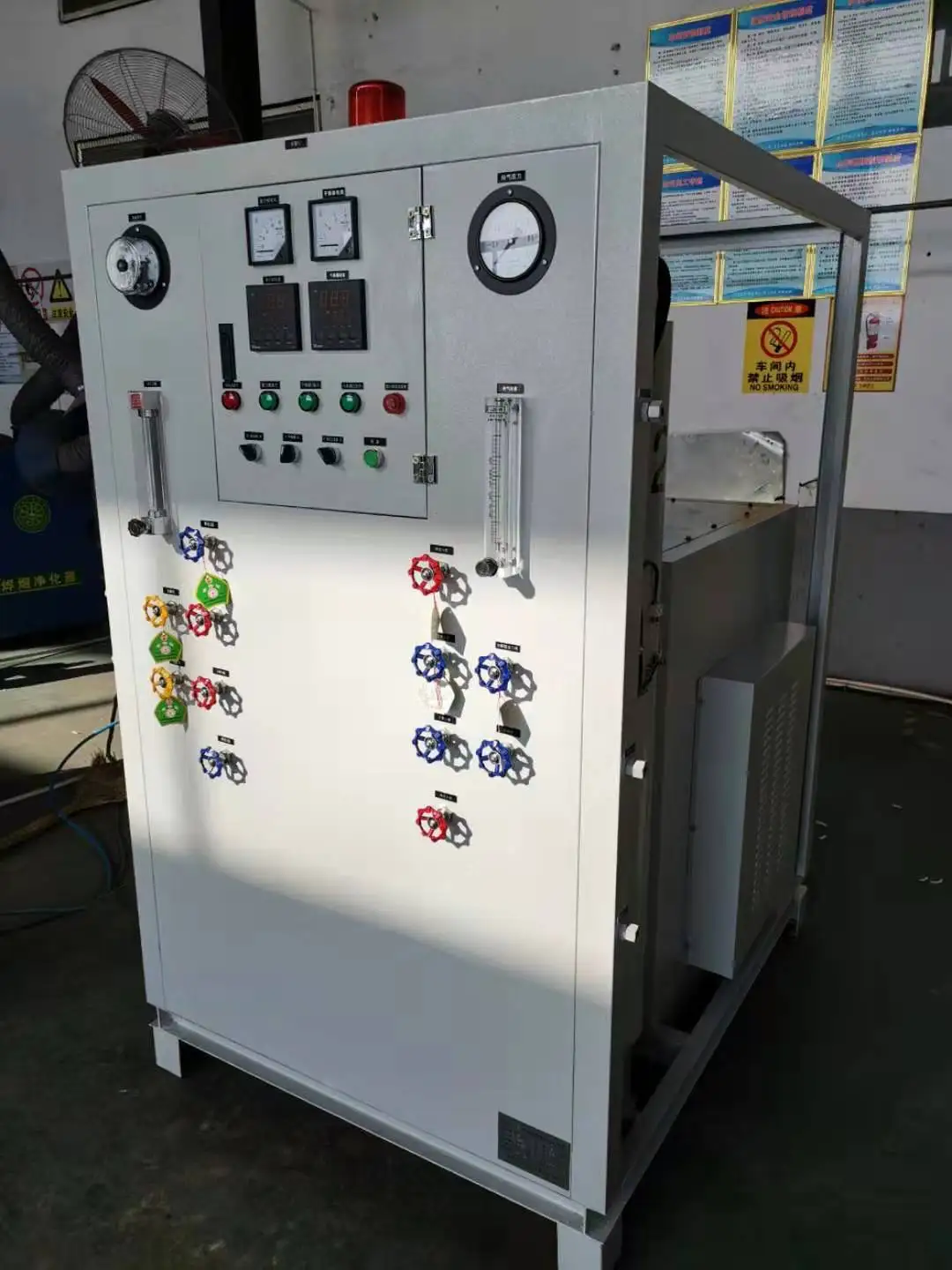
Cubic ammonia decomposition hydrogen furnace
- Category: Gas Generation Equipment >>>
- Supplier: Wuxi Longterm Machinery Technologies Co. Ltd.
Share on (62477076552):
Product Overview
Description
Cubic ammonia decomposition hydrogen furnace
I, Brief description of ammonia decomposition hydrogen production process
Liquid ammonia is used as raw material. After ammonia is cracked, 2.64Nm3 mixed gas can be produced per kilogram of liquid ammonia cracked.
Contains 75% hydrogen and 25% nitrogen. The obtained gas contains less impurities (about 2 g / m3 of water vapor in the impurities, and about 1000 ppm of residual ammonia), and then passed through a molecular sieve (UOP) adsorption purifier, the dew point of the gas can be reduced to -600C and the residual ammonia can be reduced Below 3PPM.
Ammonia cracking hydrogen furnace can be used for bright annealing of non-ferrous metals, silicon steel, chrome steel and stainless steel and other metal materials and parts, decarburization treatment of silicon steel sheet, copper-based and iron-based powder metallurgy sintering, and hydrogen treatment of metal parts for electric vacuum devices , Protective sintering and sealing of semiconductor devices, palladium alloy film diffusion and purification of hydrogen source gas, etc.
The raw material ammonia is easy to obtain, the price is low, and the raw material consumption is small. Ammonia cracking to produce protective gas has the advantages of less investment, small size, and high efficiency.
II,Working principle of ammonia decomposition to produce hydrogen:
Ammonia (gaseous) is decomposed into 75% hydrogen and 25% nitrogen under the action of a catalyst (Southwest Academy Z204) at a certain temperature, and absorbs 21.9 kcal of heat. Its main reactions are:
2NH3-3H2 + N2-21.9 kcal
The entire process is an endothermic expansion reaction. Increasing the temperature is favorable for ammonia cracking. At the same time, it is a reaction that expands the volume. Lowering the pressure is favorable for the decomposition of ammonia.
III,Working principle of hydrogen purification:
When the hydrogen produced by the ammonia decomposition hydrogen production equipment is qualified, it enters the hydrogen purification for further purification treatment. The purity of the cracked hydrogen is very high. Among them, the volatile impurities are only traces of residual ammonia and water. High purity gas.
Gas purification uses temperature-change adsorption technology. Temperature-changing adsorption (TSA) technology is a gas separation and purification process based on the adsorption performance of gas molecules at different temperatures on the internal surface of the adsorbent (porous solid matter). ,
The surface of the molecular sieve is full of micropores, which can absorb 20% of its own weight (water and impurities during static adsorption at normal temperature and pressure), and can be completely regenerated at a temperature of about 350 ° C. It is switched every 24 hours to obtain Product gas with acceptable purity and impurity content.
Products | Parameter |
Product gas purity | H2 :75%,N2:25%, |
Dew point≤-60℃ | |
Product gas pressure | 0.1Mpa |
Residual ammonia content | ≤5PPm |
Product gas temp | Ambient temperature |
Rated gas production | 5Nm3/h |
Operation Temp | 7500C~8500C |
Power | 7KW 220V |
Power per purifier | 1KW220V |
Working temp per purifier | Normal temperature |
Purifier regeneration temp | 3000C |
weight | 700Kg |
demension | 1100X1300X1700 |

We Recommend


Superior quality low price factory supplied oxygen plant cost in India
US $30000-$120000

150ml/min inhalation breathing machine hydrogen rich water
US $220.00-$300.00

New Arrivals
New products from manufacturers at wholesale prices