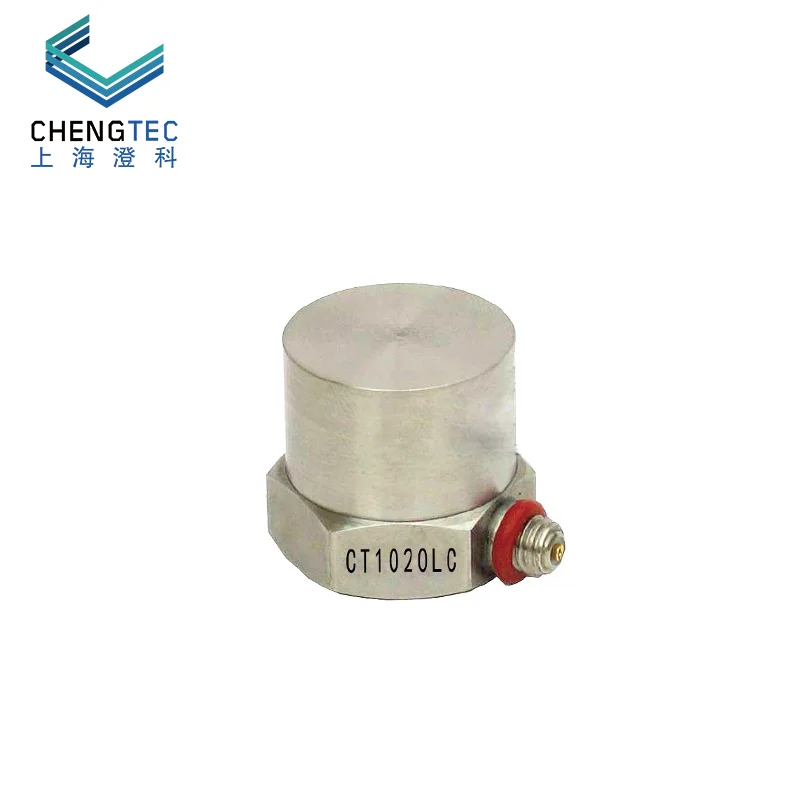
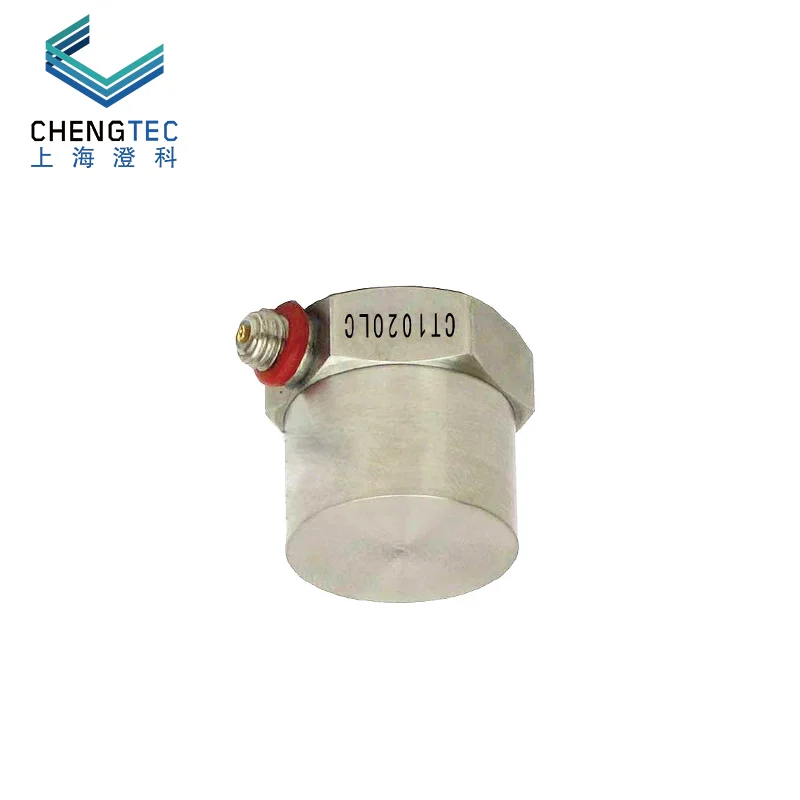
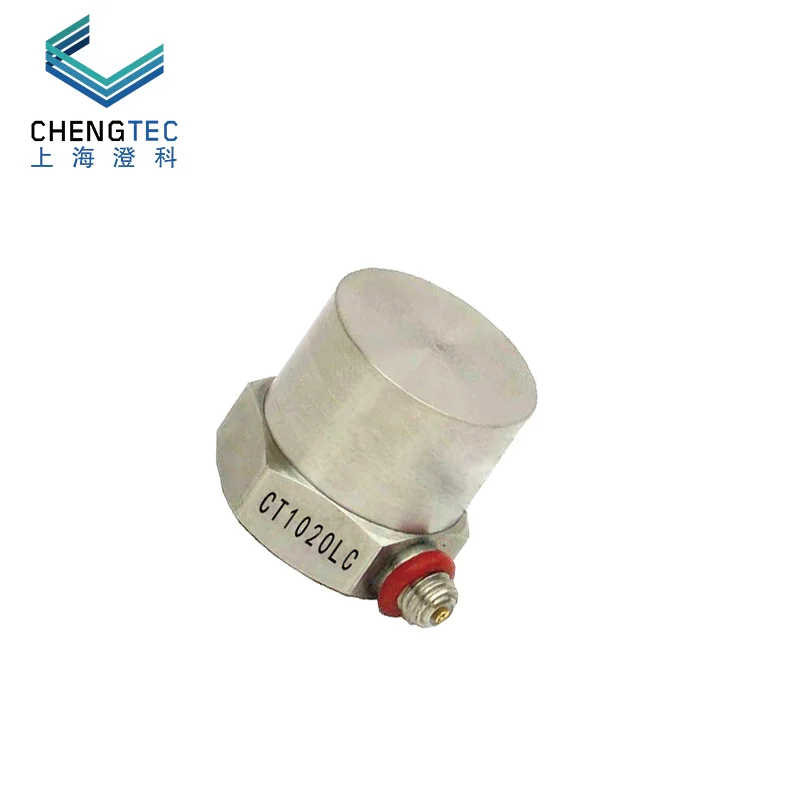
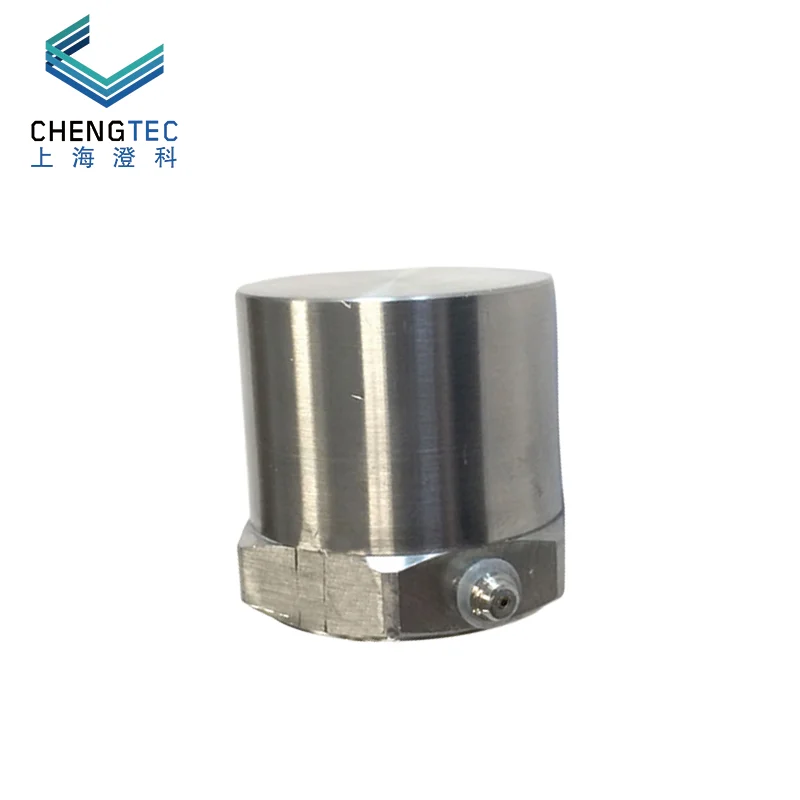
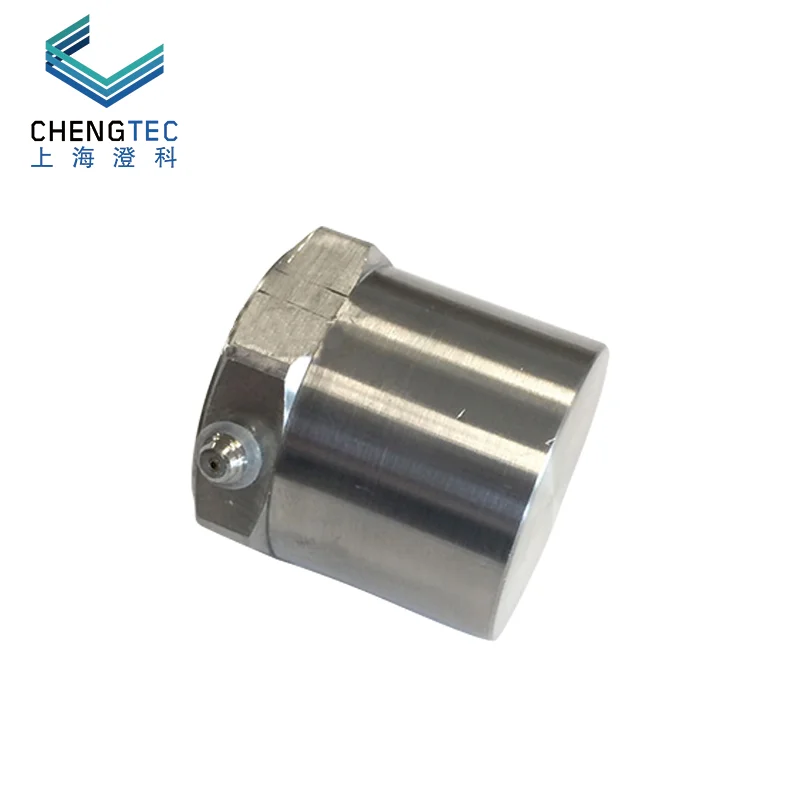
CT1020LC ICP Analog / Accelerometer 25g Piezoelectric / Vibration Universal Sensor IEPE Analog Output M5 Metalic 200 25g~ 25g
- Category: Sensors >>>
- Supplier: Shanghai Chengtest Electronics Technology Ltd. Co.
Share on (62484936136):
Product Overview
Description
Size Information
Product Description
Product Name | CT1020LC |
Sensitivity(mV/g) | 200 |
Measurement Range | ±25g pk |
Frequency Range(±3dB) | 0.5-5000Hz |
Resonant Frequency | >18k Hz |
Broadband Resolution | 0.25mg |
CT series ICP/IEPE acceleration sensor is the charge amplifier circuit integrated inside the piezoelectric sensor, using the two-wire system form (the wire shield layer as the ground, the core wire is constant current power input and signal output sharing).
The reliability of the series has been improved by strengthening test and aging treatment.
This series of sensors is compatible with constant current adapters. the product has good anti-interference, easy to use, high signal to noise ratio, good cost performance. The reliability of the series has been improved by strengthening test and aging treatment. This series of sensors is compatible with constant current adapters. The installation and use of the ICP/IEPE sensor is the same as that of the traditional charge sensor, and attention should be paid to the range value (the maximum output voltage of the sensor is ±5V).
The reliability of the series has been improved by strengthening test and aging treatment.
This series of sensors is compatible with constant current adapters. the product has good anti-interference, easy to use, high signal to noise ratio, good cost performance. The reliability of the series has been improved by strengthening test and aging treatment. This series of sensors is compatible with constant current adapters. The installation and use of the ICP/IEPE sensor is the same as that of the traditional charge sensor, and attention should be paid to the range value (the maximum output voltage of the sensor is ±5V).


Company Introduction
Shanghai Chengtest Company Profile Electronics CO,. Ltd is a high-tech enterprise which is focused on the field of test and measurement industry.
Chengtest is the pioneer in vibration test in China, which has obtained many patents. The founders of Chengtest were all graduated from EE school of Peking University, who have rich experience in vibration test industry. Chengtec offers 4 product lines, such as accelerometer senors,data acquisition equipments, analysis software and remote monitoring system based on IOT. Chengtest is devoted to be the leading provider for industrial massive data acquisition, test and measurement solutions.
Shanghai Chengtest,your reliable expert for test and measurement!
Contacts: Kevin Hu
Mobile Number:13916467084
E-mail:Kevin.hu@365ele.com
Website:www.sh-chengtec.com
Address: Room 14D, MRT Building, No. 600 TianShan Rd, Changning Distric, Shanghai
Chengtest is the pioneer in vibration test in China, which has obtained many patents. The founders of Chengtest were all graduated from EE school of Peking University, who have rich experience in vibration test industry. Chengtec offers 4 product lines, such as accelerometer senors,data acquisition equipments, analysis software and remote monitoring system based on IOT. Chengtest is devoted to be the leading provider for industrial massive data acquisition, test and measurement solutions.
Shanghai Chengtest,your reliable expert for test and measurement!
Contacts: Kevin Hu
Mobile Number:13916467084
E-mail:Kevin.hu@365ele.com
Website:www.sh-chengtec.com
Address: Room 14D, MRT Building, No. 600 TianShan Rd, Changning Distric, Shanghai


After Sales Service

Packing&Shipping

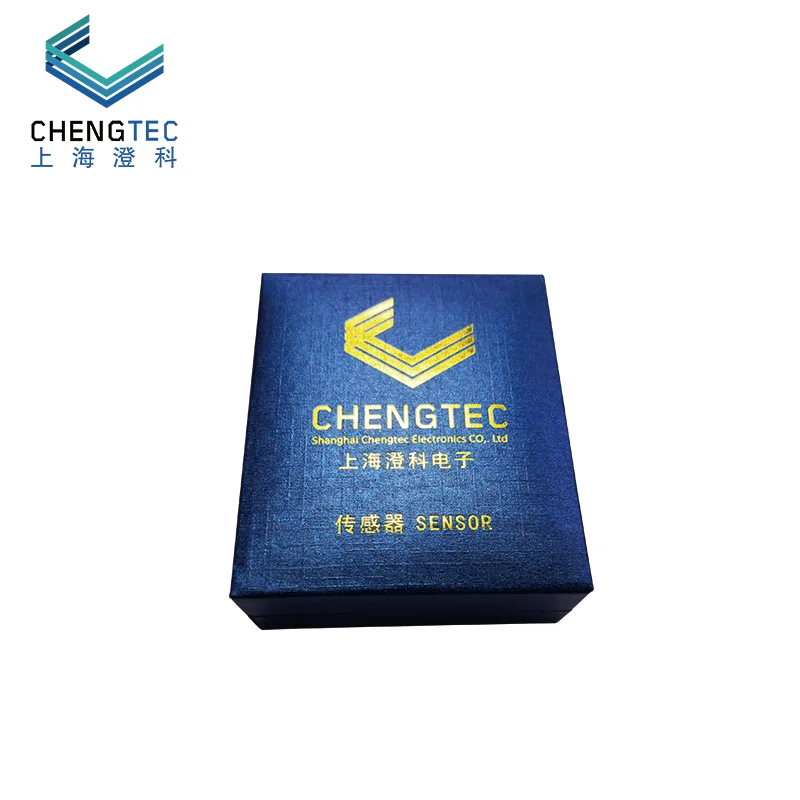
Each product will be carefully selected by the warehouse staff and then packed in double cartons. The gaps will be filled with fillers to ensure that your baby is not afraid of bumpy roads!.
Related Products
FAQ
Q: 1. What data does your accelerometer get? Amplitude or frequency?
A: After the acceleration sensor is connected to the data acquisition card, the voltage signal is obtained. This voltage signal isdirectly divided by the sensitivity coefficient of the acceleration sensor (this sensitivity is provided in the test report of
each acceleration sensor, and the unit is generally mV / g), which can be directly converted into the acceleration value. The unitis g, 1g = 9.8m / s2, the accelerometer gets the original vibration acceleration value, which is a time-domain signal. If
amplitude and frequency are needed, they can be processed in subsequent data processing links.
Q: 2. What are the main advantages of piezoelectric acceleration sensors?
A: The principle of a piezoelectric acceleration sensor is that a piezoelectric ceramic crystal induces acceleration, and a
corresponding amount of charge is induced on the surface of the crystal. A charge amplifier circuit (IEPE) is integrated insidethe sensor to directly output a -5V- + 5V voltage signal. The main advantages of piezoelectric acceleration sensors are highstability, independent of external electromagnetic environment and temperature, suitable for industrial measurement, laboratorytesting, and instrumentation.
Q: 3. How to get the speed signal and vibration frequency?
A: The subsequent data processing part can perform an integration process to obtain the speed signal, and perform an FFT
transformation to obtain the vibration frequency information.
Q: 4. How can I connect the accelerometer directly to the data acquisition device and use it?
A: If you purchased our USB-4431 or 9234 capture card, you can directly connect the sensor to our capture card and use it. Thesignal conditioning circuit inside the capture card comes with it. If you are purchasing a universal multi-function voltage dataacquisition card, you need additional signal conditioning equipment, that is, our constant current adapter, which provides aconstant current output of 2 ~ 10mA. You can choose according to different working environments and channels. CT5201 CT5204 CT5210.
Q: 5. What is the connection between the accelerometer and the data acquisition equipment?
A: If equipped with signal conditioning equipment, the M5 to BNC cable from our sensor is connected to the IEPE port of theconstant current adapter, and then the output end is connected to our data with a matching BNC rotary pin nose cable. Card. If itis equipped with a USB-4431 or 9234 capture card, you can directly use an M5 to BNC cable to connect to our data focusing card.
Q: 6. How to fix the sensor?
A: Method 1: Usually the bottom of the sensor has an M5 internal thread, which is equipped with one of our screws as standard.Customers can make male or female threads on their own equipment to park our sensors.
Method 2: You can choose our one-time magnetic installation chamber to fix our sensor on the surface of the object to be measured.
A: After the acceleration sensor is connected to the data acquisition card, the voltage signal is obtained. This voltage signal isdirectly divided by the sensitivity coefficient of the acceleration sensor (this sensitivity is provided in the test report of
each acceleration sensor, and the unit is generally mV / g), which can be directly converted into the acceleration value. The unitis g, 1g = 9.8m / s2, the accelerometer gets the original vibration acceleration value, which is a time-domain signal. If
amplitude and frequency are needed, they can be processed in subsequent data processing links.
Q: 2. What are the main advantages of piezoelectric acceleration sensors?
A: The principle of a piezoelectric acceleration sensor is that a piezoelectric ceramic crystal induces acceleration, and a
corresponding amount of charge is induced on the surface of the crystal. A charge amplifier circuit (IEPE) is integrated insidethe sensor to directly output a -5V- + 5V voltage signal. The main advantages of piezoelectric acceleration sensors are highstability, independent of external electromagnetic environment and temperature, suitable for industrial measurement, laboratorytesting, and instrumentation.
Q: 3. How to get the speed signal and vibration frequency?
A: The subsequent data processing part can perform an integration process to obtain the speed signal, and perform an FFT
transformation to obtain the vibration frequency information.
Q: 4. How can I connect the accelerometer directly to the data acquisition device and use it?
A: If you purchased our USB-4431 or 9234 capture card, you can directly connect the sensor to our capture card and use it. Thesignal conditioning circuit inside the capture card comes with it. If you are purchasing a universal multi-function voltage dataacquisition card, you need additional signal conditioning equipment, that is, our constant current adapter, which provides aconstant current output of 2 ~ 10mA. You can choose according to different working environments and channels. CT5201 CT5204 CT5210.
Q: 5. What is the connection between the accelerometer and the data acquisition equipment?
A: If equipped with signal conditioning equipment, the M5 to BNC cable from our sensor is connected to the IEPE port of theconstant current adapter, and then the output end is connected to our data with a matching BNC rotary pin nose cable. Card. If itis equipped with a USB-4431 or 9234 capture card, you can directly use an M5 to BNC cable to connect to our data focusing card.
Q: 6. How to fix the sensor?
A: Method 1: Usually the bottom of the sensor has an M5 internal thread, which is equipped with one of our screws as standard.Customers can make male or female threads on their own equipment to park our sensors.
Method 2: You can choose our one-time magnetic installation chamber to fix our sensor on the surface of the object to be measured.
Method3: Can be directly glued to the surface of the customer's measured object with glue.
Q: 7. How to choose the sensor range?
A: According to different uses, our customer service will recommend different types of sensors. Customers need to describe theproject requirements in as much detail as possible.
Q: 8. If customers want to choose their own type, we make the following recommendations:
A: 1. For general mechanical vibration, we recommend 50g range, CT1010L or CT1010LC. If the vibration is small, you can useCT1020LC (25g orange), if the vibration is too large, you can use CT1005L or CT1005LC (1009 range).
2. For impact and blast tests, a large range of acceleration sensors is required. The measurement range is CT1002L or CT1002L C(2509 range), CT1001L (500g range), CT1000L (1000g service range) or greater.
3. For civil engineering, earthquake monitoring, and structural testing, low frequency and small range can be considered. Forexample, 10g range cT1050LC, 5g orange CT1100LC, or smaller range.
Q: 9. Why is the small-range acceleration sensor more expensive than the general one?
A: The internal structure of the piezoelectric acceleration sensor is a piezoelectric ceramic body. The smaller the range, the
higher the sensitivity. The greater the number of piezoelectric ceramic pieces inside the sensor, the more sufficient the chargeaccumulation effect. . The smaller the range, the more complicated the internal structure of the sensor, the larger the volume,the larger the weight, and the more difficult the process, so the price will be more expensive. Similarly, a large number oforange acceleration sensors of the impact type are generally small in volume due to low sensitivity, but due to the stability ofthe internal circuit under a large impact, and the manufacturing process is raised, the price is generally higher than the generaltype.
What is the connection between the accelerometer and the data acquisition device?
If equipped with signal conditioning equipment, the M5 to BNC cable from our sensor is connected to the IEPE port of the constantcurrent adapter, and then the output end is connected to our data acquisition card with a matching BNC to pin nose cable.If it is equipped with a USB-4431 or 9234 capture card, you can directly use an M5 to BNC cable to connect to our data capturecard.
Q: 10. How to fix the sensor?
A: Method 1: Usually the bottom end of the sensor has an M5 internal thread, which is equipped with one of our screws as standard.Customers can make male or female threads on their own equipment to fix our sensors.
Method 2: You can choose our one-time magnetic mount to fix our sensor to the surface of the object to be measured.
Method 3: Can be directly glued to the surface of the customer's measured object with glue.
Q: 11. How to choose the sensor range?
A: According to different uses, our customer service will recommend different types of sensors. Customers need to describe theproject requirements in as much detail as possible.
Q: 12. If the customer wants to choose by himself, we make the following recommendations:
A: 1. For general mechanical vibration, we recommend 50g range, CT1010L or CT1010LC. If the vibration is small, you can useCT1020LC (25g range), if the vibration is too large, you can use CT1005L or CT1005LC (100g range).
2. For impact and blast tests, a large range of acceleration sensors is required. The range can be selected from CT1002L orCT1002LC (250g range), CT1001L (500g range), CT1000L (1000g range) or greater.
3. For civil engineering, earthquake monitoring, and structural testing, low frequency and small range can be considered. Forexample, 10g range CT1050LC, 5g range CT1100LC, or smaller range.
Q: 7. How to choose the sensor range?
A: According to different uses, our customer service will recommend different types of sensors. Customers need to describe theproject requirements in as much detail as possible.
Q: 8. If customers want to choose their own type, we make the following recommendations:
A: 1. For general mechanical vibration, we recommend 50g range, CT1010L or CT1010LC. If the vibration is small, you can useCT1020LC (25g orange), if the vibration is too large, you can use CT1005L or CT1005LC (1009 range).
2. For impact and blast tests, a large range of acceleration sensors is required. The measurement range is CT1002L or CT1002L C(2509 range), CT1001L (500g range), CT1000L (1000g service range) or greater.
3. For civil engineering, earthquake monitoring, and structural testing, low frequency and small range can be considered. Forexample, 10g range cT1050LC, 5g orange CT1100LC, or smaller range.
Q: 9. Why is the small-range acceleration sensor more expensive than the general one?
A: The internal structure of the piezoelectric acceleration sensor is a piezoelectric ceramic body. The smaller the range, the
higher the sensitivity. The greater the number of piezoelectric ceramic pieces inside the sensor, the more sufficient the chargeaccumulation effect. . The smaller the range, the more complicated the internal structure of the sensor, the larger the volume,the larger the weight, and the more difficult the process, so the price will be more expensive. Similarly, a large number oforange acceleration sensors of the impact type are generally small in volume due to low sensitivity, but due to the stability ofthe internal circuit under a large impact, and the manufacturing process is raised, the price is generally higher than the generaltype.
What is the connection between the accelerometer and the data acquisition device?
If equipped with signal conditioning equipment, the M5 to BNC cable from our sensor is connected to the IEPE port of the constantcurrent adapter, and then the output end is connected to our data acquisition card with a matching BNC to pin nose cable.If it is equipped with a USB-4431 or 9234 capture card, you can directly use an M5 to BNC cable to connect to our data capturecard.
Q: 10. How to fix the sensor?
A: Method 1: Usually the bottom end of the sensor has an M5 internal thread, which is equipped with one of our screws as standard.Customers can make male or female threads on their own equipment to fix our sensors.
Method 2: You can choose our one-time magnetic mount to fix our sensor to the surface of the object to be measured.
Method 3: Can be directly glued to the surface of the customer's measured object with glue.
Q: 11. How to choose the sensor range?
A: According to different uses, our customer service will recommend different types of sensors. Customers need to describe theproject requirements in as much detail as possible.
Q: 12. If the customer wants to choose by himself, we make the following recommendations:
A: 1. For general mechanical vibration, we recommend 50g range, CT1010L or CT1010LC. If the vibration is small, you can useCT1020LC (25g range), if the vibration is too large, you can use CT1005L or CT1005LC (100g range).
2. For impact and blast tests, a large range of acceleration sensors is required. The range can be selected from CT1002L orCT1002LC (250g range), CT1001L (500g range), CT1000L (1000g range) or greater.
3. For civil engineering, earthquake monitoring, and structural testing, low frequency and small range can be considered. Forexample, 10g range CT1050LC, 5g range CT1100LC, or smaller range.

We Recommend


New Arrivals
New products from manufacturers at wholesale prices