Природный асфальт, как «гилсонит», используется в нефтегазовой промышленности
- Category: Bitumen >>>
- Supplier: BASEKIM KIMYASAL URUNLER IC VE DIS TICARET LIMITED SIRKETI
Share on (62489366988):
Product Overview
Description
General description cementing additive in oil and gas
Gilsonite in oil and gas well cementing is a highly developed technology. Cement-water slurries, with or without various additives, have been used for many years in cementing procedures carried out from time to time during the drilling of the productive life of a well. Cementing is often applied during drilling and completion procedures in connection with protection of production zones, isolation and confinement of water zones, support of bore hole wall, anchorage of casing,and control of lost circulation not overcome by methods associated with the circulation of drilling mud. Such cementing procedures by gilsonite additives are ordinarily regarded as being of primary character.
Particle size of cementing additive in oil and gas
Particle size and particle size distribution of the gilsonite determine the strength and porosity-permeability characteristics of the set cement for any given mix ratio. Where maximum strength is desirable, a coarse natural asphalt where lightest weight and lowest porosity-permeability are important and strength is to be sacrificed or is of little importance, an aggregate of minus 50 mesh or finer may be used.
Usage cementing additive in oil and gas
Gilsonite should be realized that there are various classes with respect to melting points. The lower the melt point, the faster the gilsonite will dissolve in a solvent therefor or soften under conditions of heat. Therefore, the use of gilsonite in an oil and gas well cementing composition affords an opportunity to select a class of that material which best serves the particular purpose.The heat softening characteristic of gilsonite becomes of particular importance in instances of relatively high bottom hole temperatures, where there is a tendency for the gilsonite to soften and diffuse into the surrounding cement.
With blending of gilsonite with other drilling mud additives increase performance in cementing and drilling fluids in a way no other single additive can.gilsonite, the recognized industry standard for filtration control, is equally effective at controlling lost circulation and improving wellbore stability.
Gilsonite has significant health, safety and environmental (HSE) advantages over synthetic products.
Non-toxic
Non-carcinogenic
Non-mutagenic
Cementing advantage
Strengthens cement bonds to shales and sands
Reduces cement slurry density
Prevents lost circulation
Supports compressive strength development
Drilling fluids advantage
Provides superior shale stabilization
Prevents differential sticking
Reduces or eliminates lost circulation
Provides wellbore strengthening matrix
Formula of mixture by gilsonit
Packing of powder form micronized
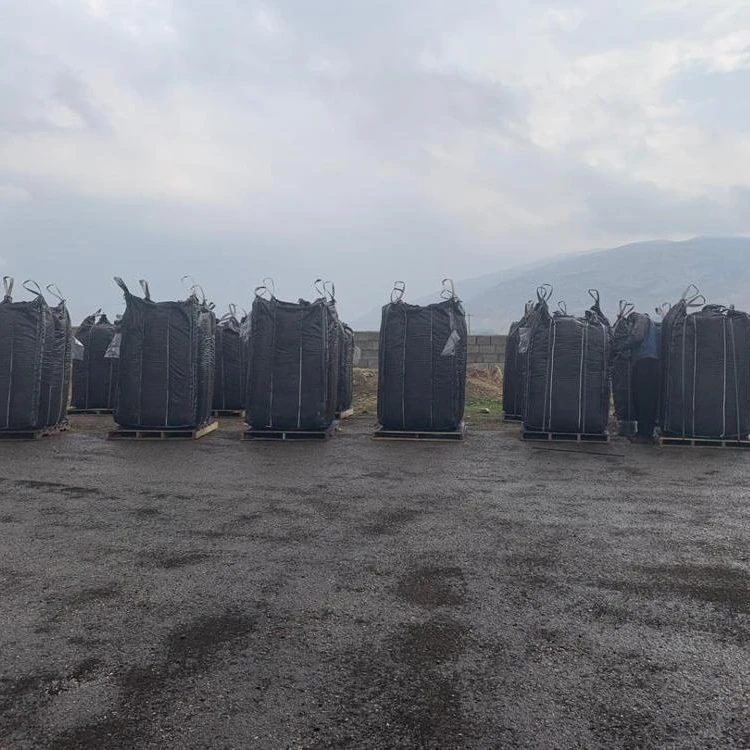
lump form like rock packed in 500~1000kg jumbo bag
200 mesh packed in 500~1000kg jumbo bag
300 mesh packed in 500~1000kg jumbo bag
30-40 mesh packed in 500~1000kg jumbo bag
100 mesh packed in 500~1000kg jumbo bag
300 mesh packed in 25kg pp bag
200 mesh packed 25kg multi paper bag
200 mesh packed 50lbs multi paper bag
30-40 mesh packed pp bag on pallet
Bulk on vessel
Specification of gilsonite
TEST METHOD | RESULT | TEST | NO |
ASTM-D3174 | 5 | ASH CONTENT,WT% | 1 |
ASTM-D3173 | 1% | MOISTURE CONTENT,WT% | 2 |
ASTM-D3175 | 63 | VOLATILE MATTER,WT% | 3 |
ASTM-D4 | 81 | SOLUBILITY IS CS2,WT% | 5 |
ASTM-D3289 | 1.11 | SPECIFIC GRAVITY @25 C | 6 |
ASTM-D3279 | 79 | NORMAL HEPTHAN INSOLUBLES,WT% | 7 |
------------------- | Black | COLOR IS MASS | 8 |
------------------- | Black | COLOR IN STREAK OR POWDER | 9 |
ASTM-D36 | 210 | SOFTENING POINT,C | 10 |
ASTM-D5 | 0 | PENETRATION @25C | 11 |
ELEMENT ANALYSIS | |||
ASTM-D5291 | 84 | CARBON,WT% | 1 |
ASTM-D5291 | 7.1 | HYDROGEN,WT% | 2 |
ASTM-D5291 | 3.67 | NITROGEN,WT% | 3 |
ASTM-D5291 | 3.1 | OXYGEN,WT% | 4 |
LECO(S)ANALYZER | 4 | SULPHURE,WT% | 5 |
We Recommend

Quality Bitumen 60/70
US $220.00-$300.00


Top quality Bitumen 60/70 at cheap price
US $100.00-$150.00

Bitumen (All Penetration grade bitumen) Wholesale
US $230.00-$235.00
New Arrivals
New products from manufacturers at wholesale prices