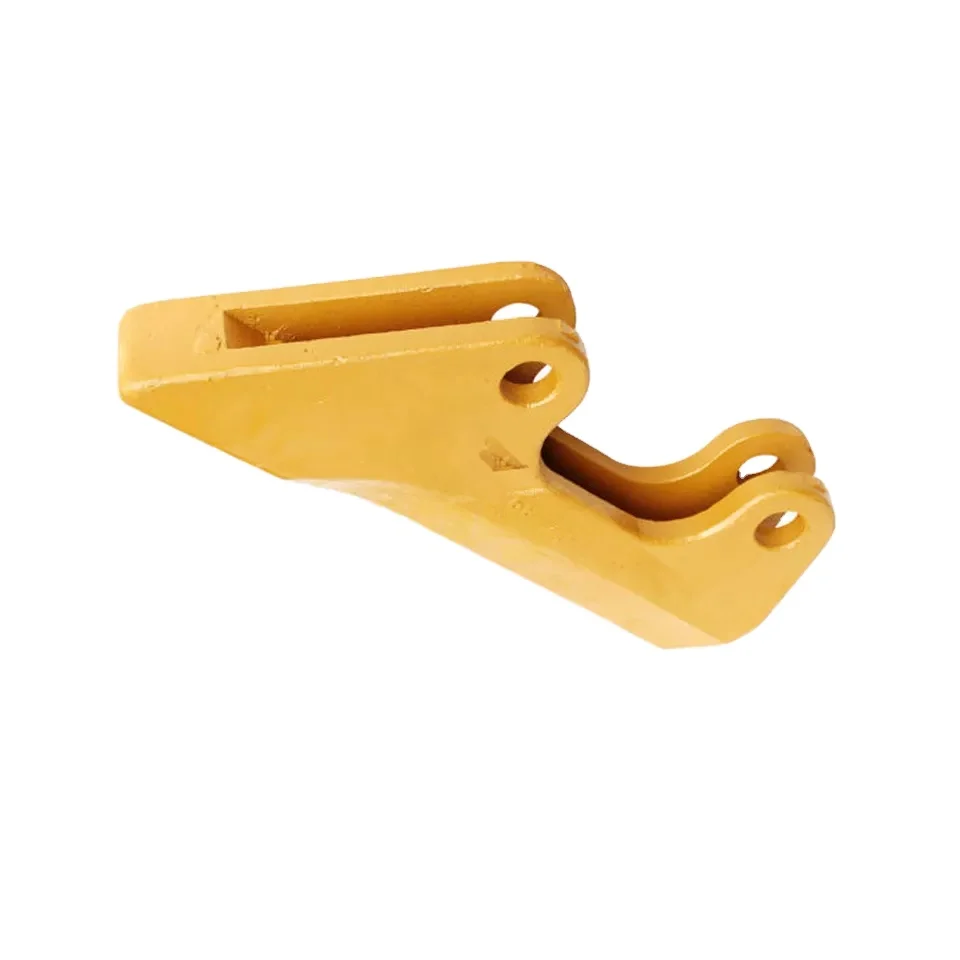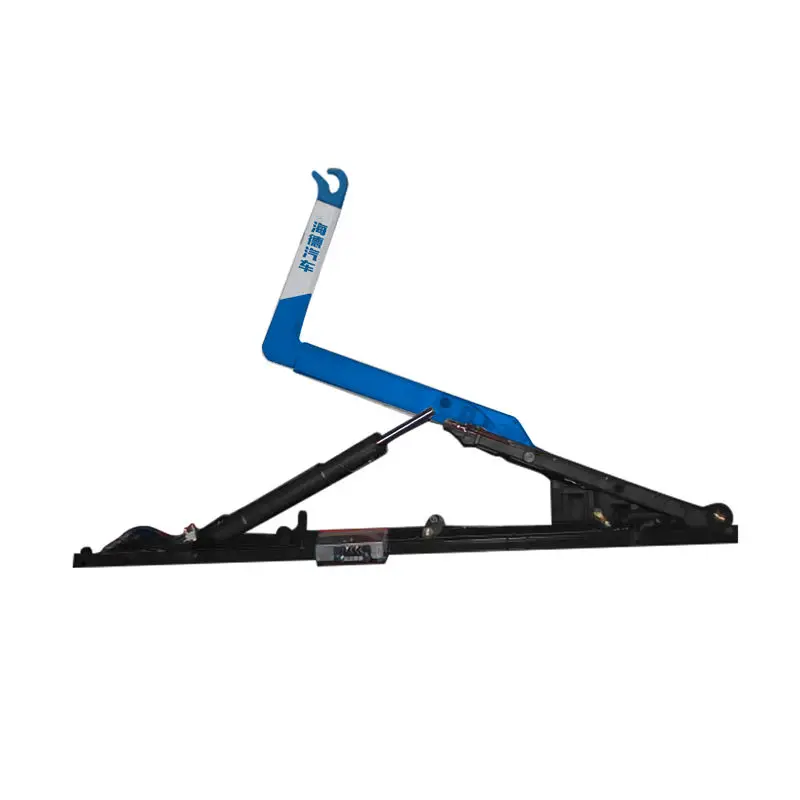
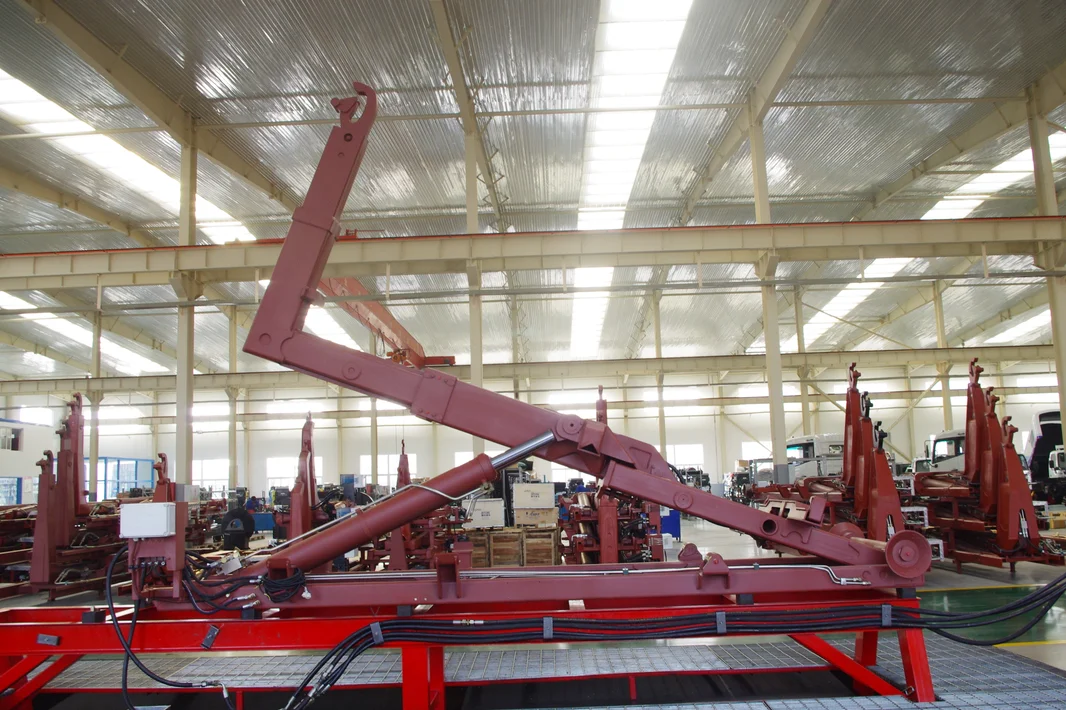
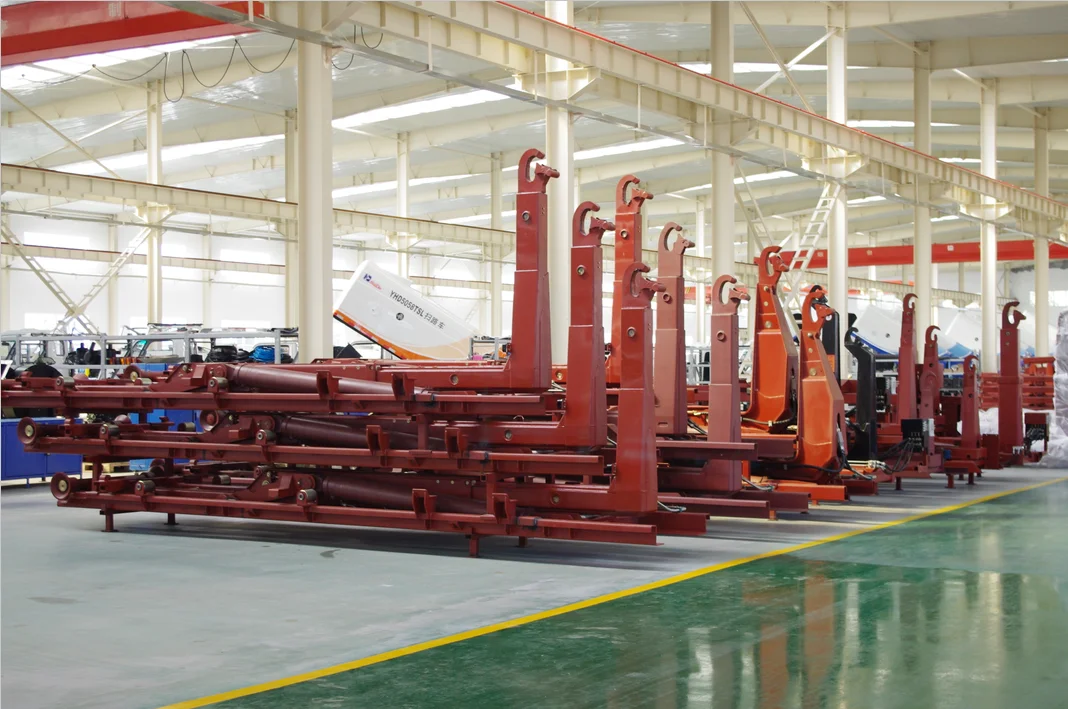
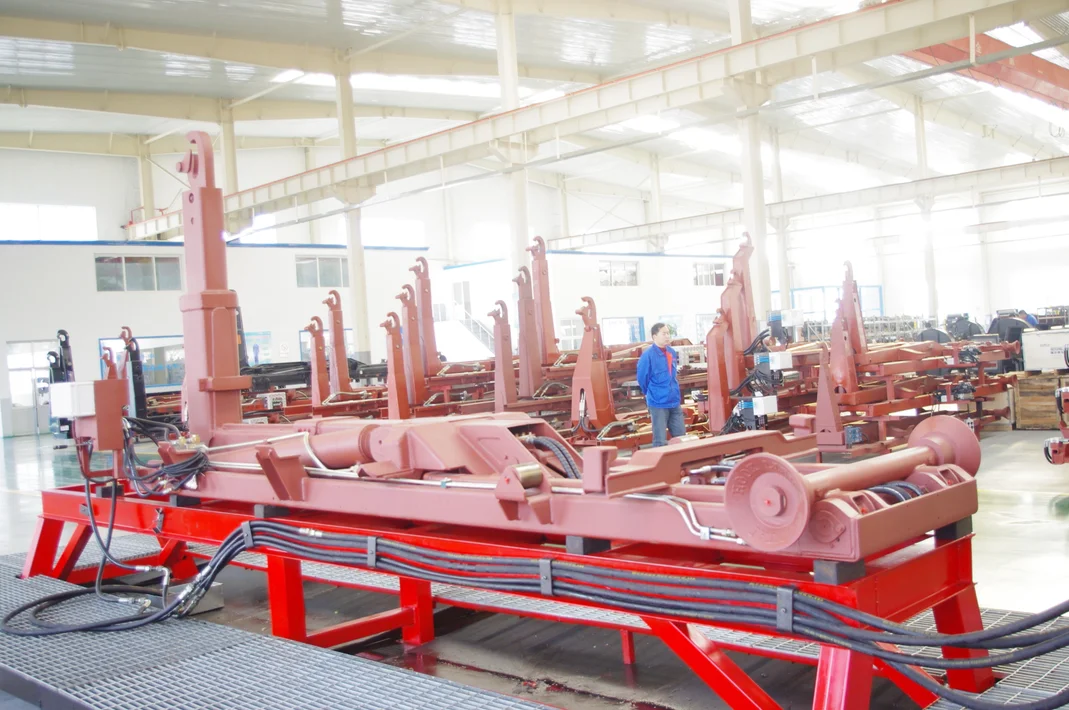
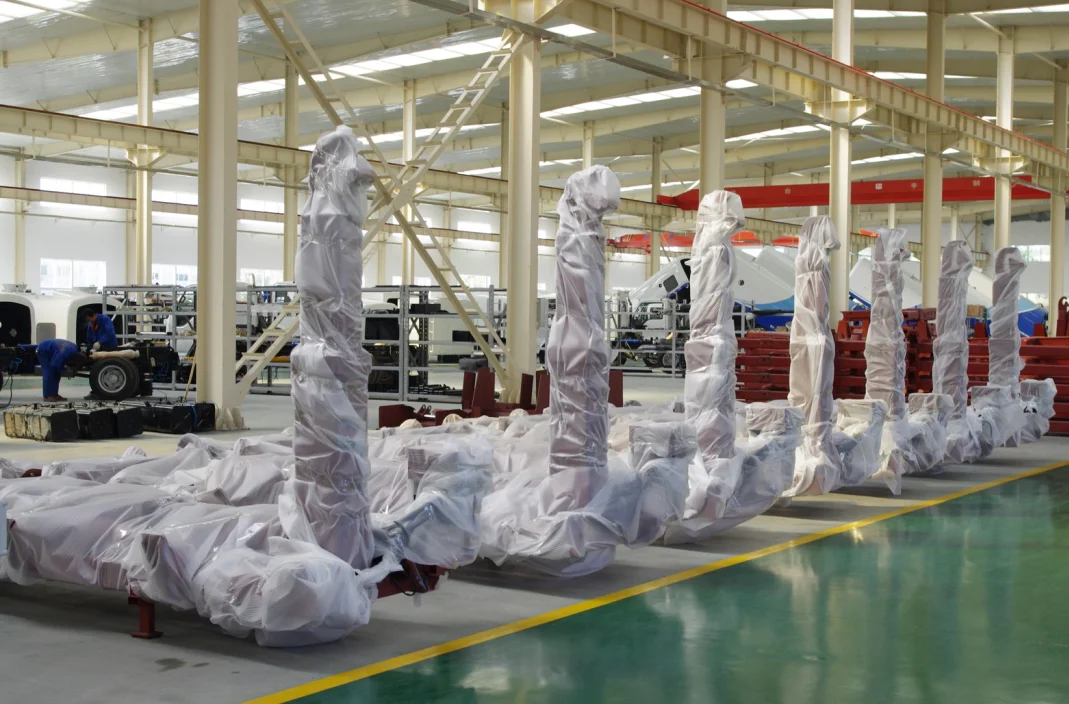
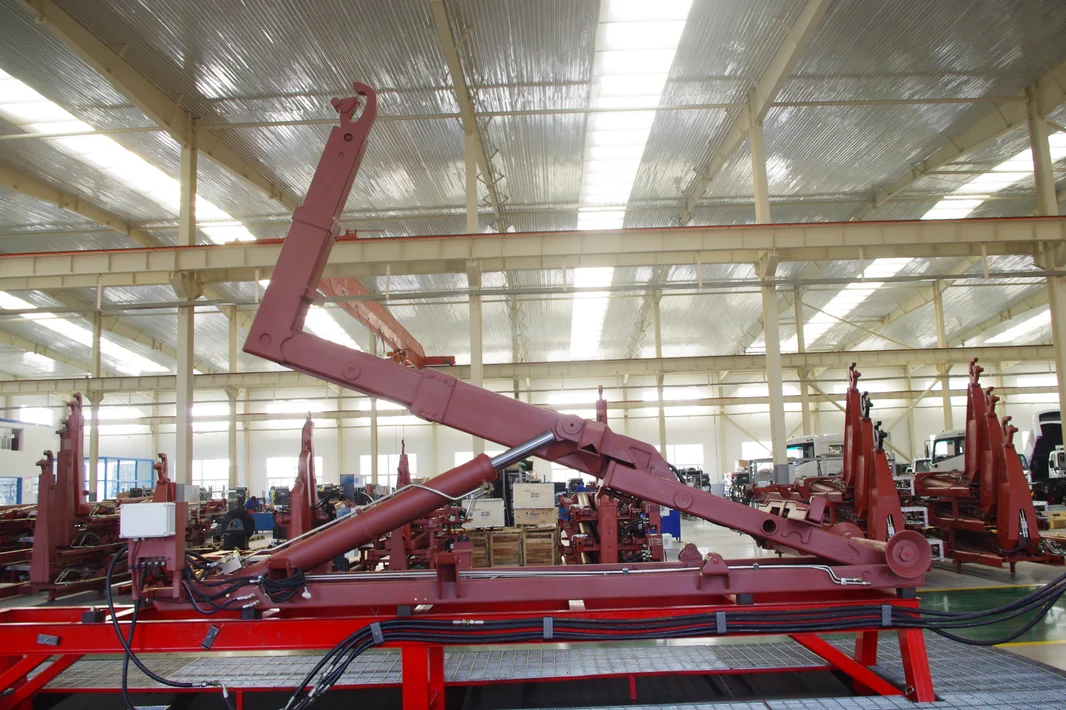
Hydraulic hook lift hoist mounted on heavy duty trucks designed for transportation of materials in the waste, recycling, scrap
- Category: >>>
- Supplier: Shandong Howe Technologies Co. Ltd.
Share on (1600924955287):
Product Overview
Description
Product name: | Telescopic Hook Lift Hydraulic Arm Hook Lift Garbage Truck |
Brand: | Haide |
Model: | YHLLB-08-H |
Hydraulic hooklift hoists are mounted on heavy duty trucks to enable hauliers to change out flatbeds, dumpster bodies, and similar containers. Primarily used in conjunction with tilt frame bodies and specialised roller containers, generally designed for the transportation of materials in the waste, recycling, scrap and demolition industries, as well as for disposal of construction debris.
The system employs a series of hydraulic rams to hook, lift and hoist the container onto the chassis of the truck. There are
several configuration options, and strict guidelines[2] which must be followed to ensure that the container is secured on the truck in transit.
This hook lift truck has the features of a good economy, strong power, reliability and safety, low running noise and environmental protection, easy operation, stable performance, etc. This vehicle come with a large garbage load. All the garbage is completely sealed in the tank which can avoid secondary pollution during the lifting and transport. The hook lift is designed and manufactured with advanced European technology that's come with stable performance and excellent production. The design of the hook-lift is safe and reliable, lightweight with strong power, a large tipping angle, and quick loading and unloading.The system employs a series of hydraulic rams to hook, lift and hoist the container onto the chassis of the truck. There are
several configuration options, and strict guidelines[2] which must be followed to ensure that the container is secured on the truck in transit.
Load capacity
Lift and dump capacities of hydraulic hooklift hoists typically range from 8,000 to 68,000 lb (3,630 to 30,800 kg). Generally a hoist is capable of lifting (off the ground) and dumping (onto the ground) the same maximum capacity, although there can be exceptions where short wheel bases are involved.
The ratio of container length to chassis length is a factor in achieving rated load capacity. This ratio determines the load
angle, and all hooklift hoist systems indicate a recommended range of body lengths, typically 3–5 ft (914–1,524 mm) difference in length between the container and the chassis. Container bodies shorter than the recommended length produce substantially steeper load angles, and consequently lower load rating, than those of the longest bodies intended for use with a particular hoist.
Chassis frame height is also important, as the lower the chassis frame height, the lower the potential load angle. A combination of low chassis with the longest recommended body lengths offers the best case.
Finally, hook height has an effect, as a taller hook height achieves a greater lift and dump capacity.
Lift and dump capacities of hydraulic hooklift hoists typically range from 8,000 to 68,000 lb (3,630 to 30,800 kg). Generally a hoist is capable of lifting (off the ground) and dumping (onto the ground) the same maximum capacity, although there can be exceptions where short wheel bases are involved.
The ratio of container length to chassis length is a factor in achieving rated load capacity. This ratio determines the load
angle, and all hooklift hoist systems indicate a recommended range of body lengths, typically 3–5 ft (914–1,524 mm) difference in length between the container and the chassis. Container bodies shorter than the recommended length produce substantially steeper load angles, and consequently lower load rating, than those of the longest bodies intended for use with a particular hoist.
Chassis frame height is also important, as the lower the chassis frame height, the lower the potential load angle. A combination of low chassis with the longest recommended body lengths offers the best case.
Finally, hook height has an effect, as a taller hook height achieves a greater lift and dump capacity.


We Recommend


New Arrivals
New products from manufacturers at wholesale prices