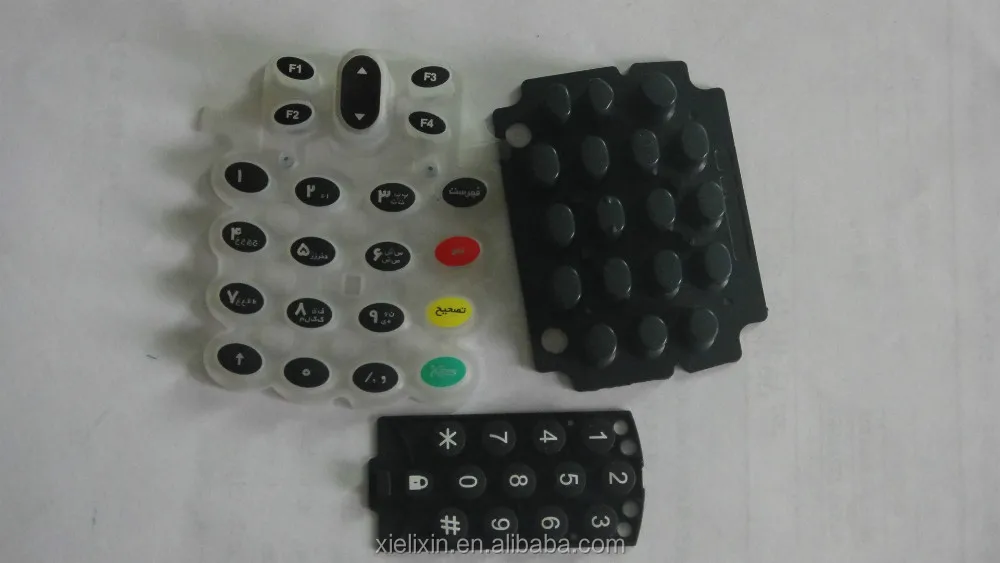
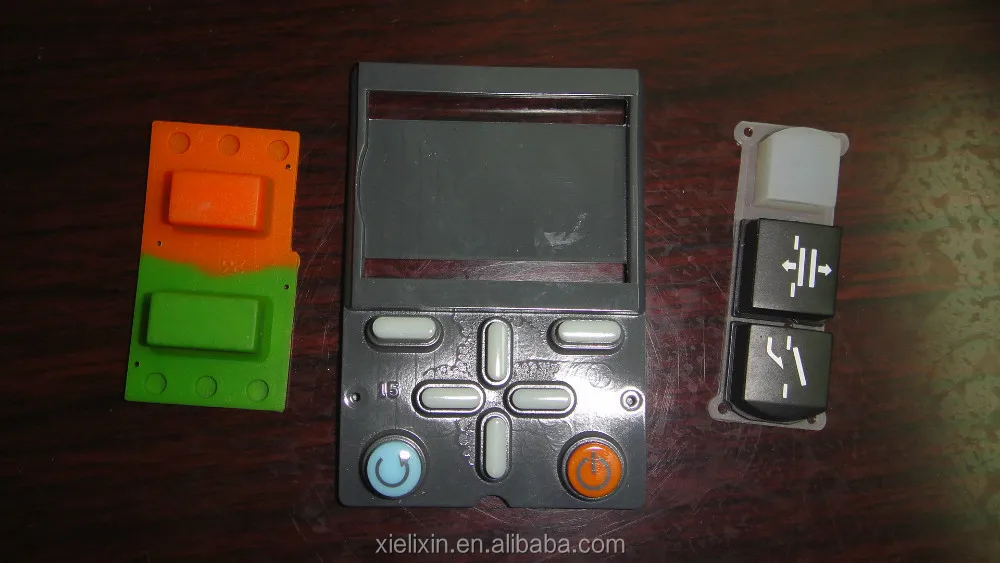
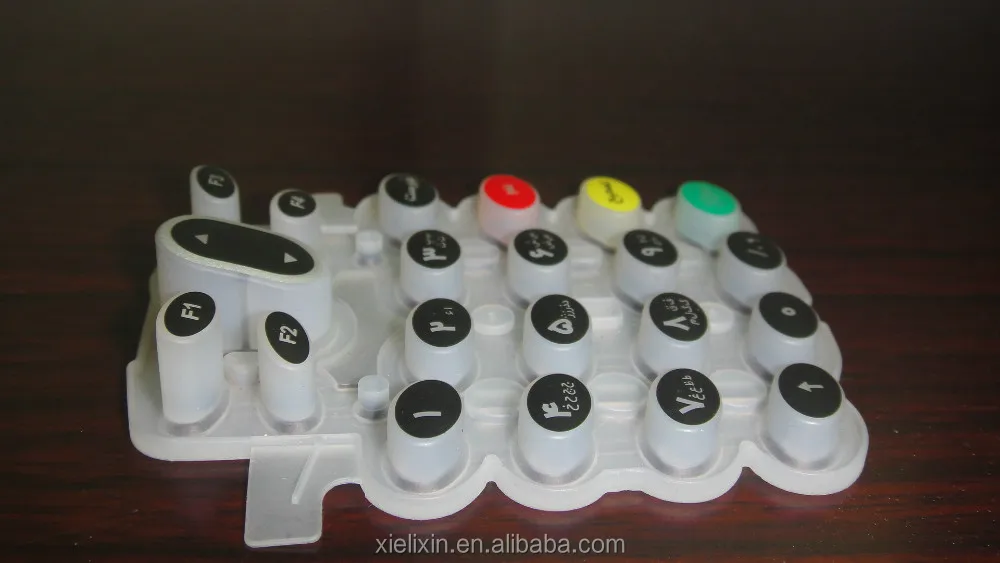
silicone keypad with conductive carbon pills Silk screen printing spray laser etching back lighted for electronic products
- Category: Printing Inks >>>
- Supplier: Xiamen Xielixin Electron Co. Ltd. [Fujian China]Xiamen
Share on (60113767958):
Product Overview
Description
keypad for electronic products keypads for doors / adhesive silicone rubber keypad silicone rubber keypad transparent
Advantages:
1.customized size&color
2.good air-proofness&heat resistance
3. Size: Can be customized
Material | NBR, NR, EPDM, FKM, SBR, Silicone, Neoprene or Custom |
Size | According to the 2D or 3D technical drawing or samples |
Color | transparent,black,any color |
Duro | 30~80 |
Technics | designed by 3D high accuracy, small error |
Finish | diepressing |

THE APPLICATION GUIDE is an aid in the design and development of silicone keypads and specialty products.
Silicone combines excellent feel, reliability and long life in the most rugged environment. Silicone keypads are
used in a wide range of applications including medical, industrial, instrumentation and communications equipment.
The Application Guide includes:
- Material and Processes
- Mechanical Tolerances
- Graphics Criteria
- Design Recommendations
- Drawing Information
- Terminology
Silicone material is supplied to the keypad industry in two forms, liquid and gumstock. Liquid silicone is a two
part system mixed as it is used; gumstock is a one part system that has a shelf life. Both are heat cured. Liquid
silicone has the consistency of vaseline while gumstock is more like putty or clay. Silicone is measured for
hardness in a shore A scale. The lower the number, the more silicone there is in the product and the softer it feels.
The higher the numbers the less silicone and the more filler there is in the product and the harder it feels.
Fillers can reduce elongation, compression set, tear and tensile strength.
There are less than a half dozen manufacturers of silicone. Molding silicone rubber varies by process. The tools themselves are very similar and are usually made
from P20 steel or 6061 aluminum. Wear on the tooling is usually negligible over the life of a project unless
fillers that cause abrasion are added.
We Recommend


New Arrivals
New products from manufacturers at wholesale prices